Midwest Cover Crops Council (MCCC-130)
This publication is intended to provide a starting point for farmers who are new to growing cover crops. With experience, farmers may fine-tune the use of cover crops for their systems.
Introduction
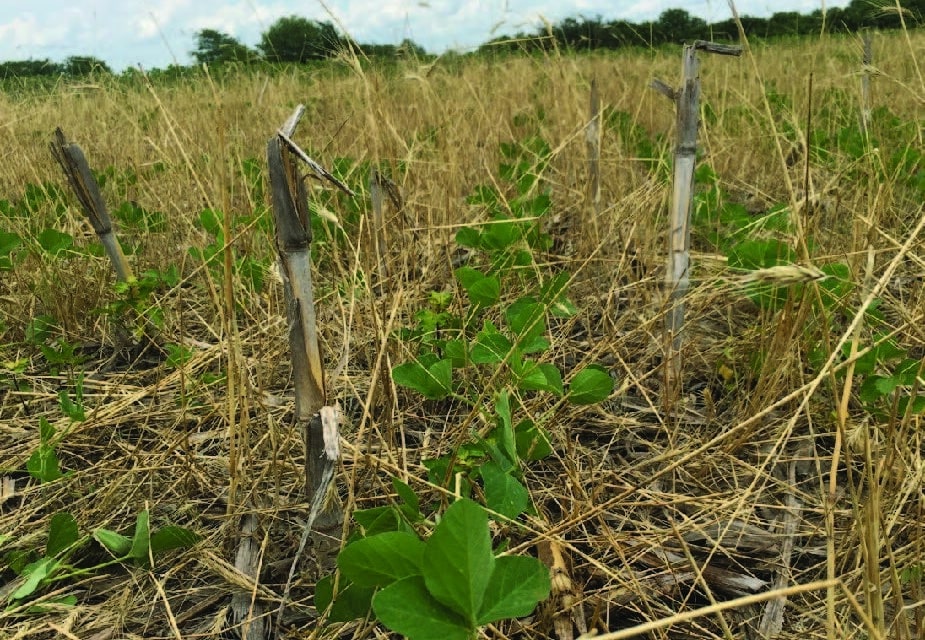
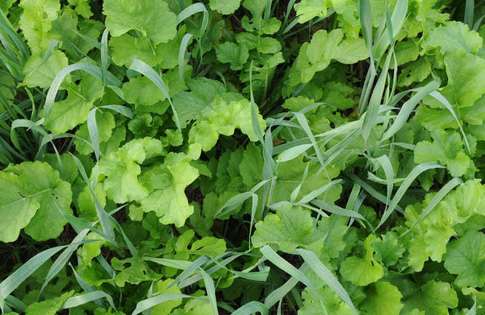
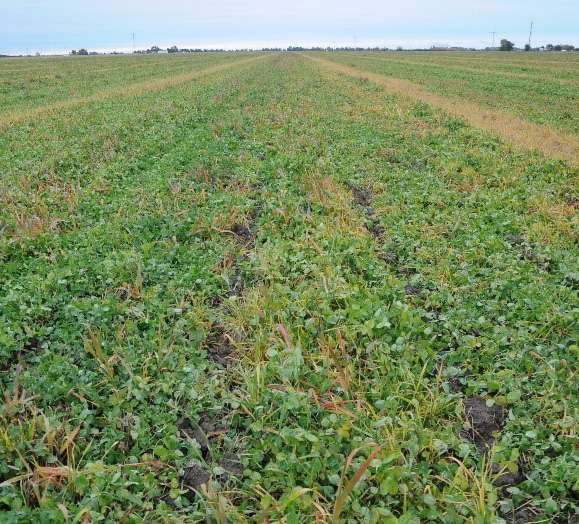
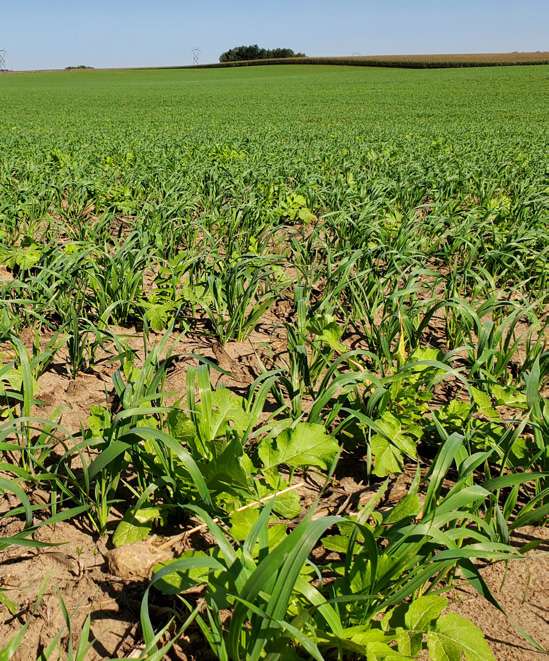
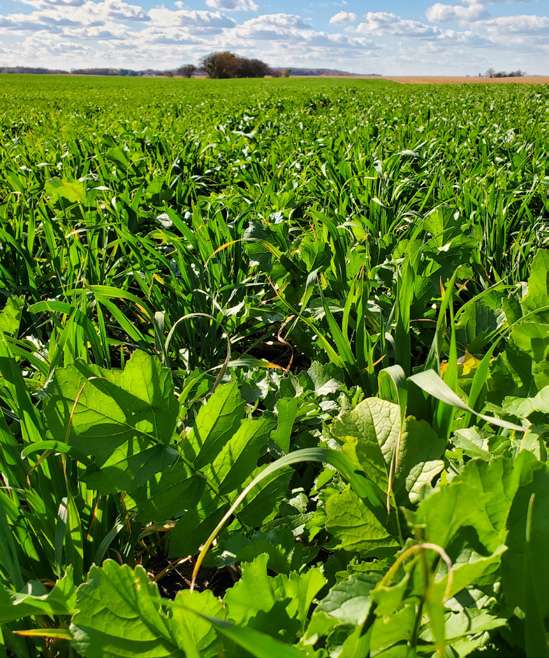
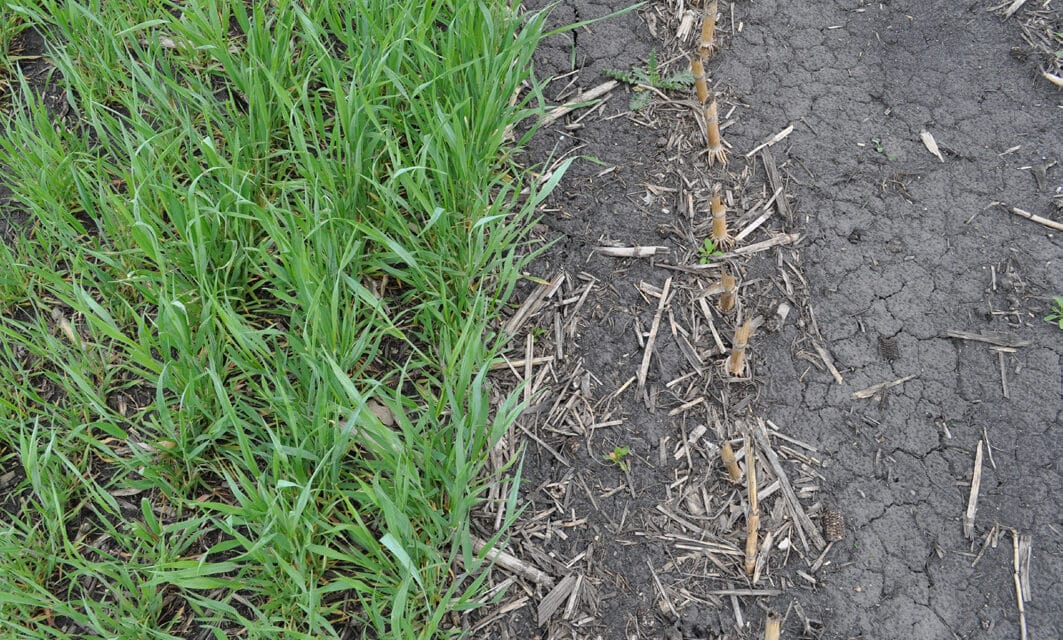
This recipe provides an introductory approach for integrating a cereal rye cover crop after corn silage harvest and before corn for grain or silage.
Planning and Preparation
- Planning—Educate yourself. Go to field days, learn from farmers who are currently planting cover crops, read about cover crops, check out University of Minnesota cover crop research, and work with your local Natural Resources Conservation Service (NRCS) and Soil and Water Conservation District. Start small and be timely. Consult with your crop insurance representative to ensure planned practices will not affect your insurance coverage.
- Corn hybrid and planting—If possible, plant the preceding corn silage crop early and use a hybrid adapted to your location.
- Residual corn herbicides—Manage for optimal weed control. Apply a preemergence herbicide to help control troublesome weeds such as waterhemp, which emerges over a long period of time and late in the season, or weeds that are resistant to key postemergence herbicides. Cereal rye can tolerate most residual corn herbicides applied earlier in the season, but if the rye will be grazed or used for forage, you must follow rotational restrictions listed on the label of any applied herbicides. (See Managing Risk When Using Herbicides)
- Seed purchase—Order cereal rye seed early from a reputable source. Use good-quality tagged seed that has been cleaned and tested for germination and weed seed contamination. Named varieties can produce greater growth and have more predictable development, but they are usually more expensive than VNS (variety not stated) seed. Utilize University of Minnesota field crop variety trial results for winter rye in variety selection, and consider forage quality if you intend to harvest the cereal rye for forage.
Fall Work
- Corn silage harvest—Prioritize fields where cereal rye is to be planted.
- Tillage, manure, fertilizer, and lime—Generally, cover crops are more successful in no-tillage or strip-tillage systems. For best rye establishment, any manure, fertilizer, or lime should be injected, subsurface-banded, or surface-applied and incorporated before planting the cover crop. Manure can be injected with a low-disturbance applicator after the cereal rye is seeded, preferably after the cereal rye has reached at least 4 inches in height, although the cover crop may be damaged.
- Timing of planting—Ideally, plant cereal rye by mid-September and as soon as possible after corn silage harvest to optimize biomass production. Try to time seeding before a rain.
- Seeding rate—If drilling cereal rye (preferred method for best establishment), use a minimum seeding rate of 55 lbs./acre of pure live seed (PLS). If broadcasting without incorporation, increase the rate to a minimum of 83 lbs./acre of PLS. Ensure that your seeding rate complies with any cost-share standards from a funding agency, if applicable. Consider increasing the seeding rate to increase forage yield.
- Planting method—Drill seed to a depth of 0.75–1.50 inches or broadcast with shallow incorporation. Aerial seeding once corn reaches the R5 (dent) stage is another option, but this carries more risk of poor establishment than drilling.
Spring Work
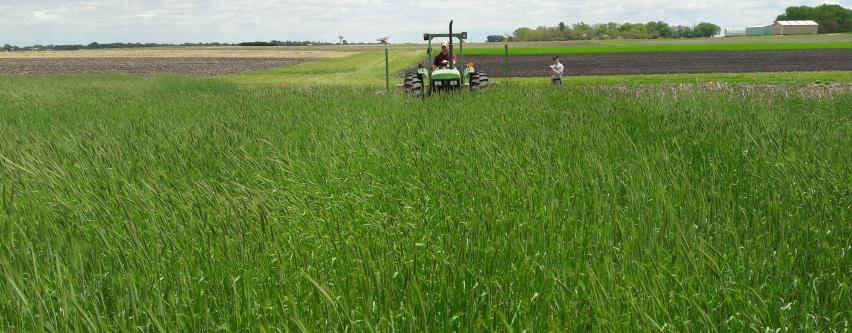
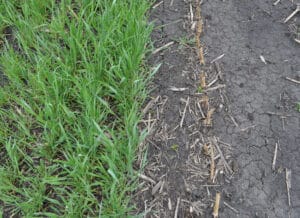
- Termination timing—Terminate cereal rye in the spring when plants are actively growing and are no more than 12 inches tall or at least 10 days prior to planting corn—whichever comes first. Cereal rye can grow quickly in warm weather and be more difficult to control once it reaches the boot stage or is taller than 18 inches. Consult your crop insurance agent and check USDA-NRCS Cover Crop Termination Guidelines to ensure you are in compliance with rules on termination timing.
- Termination herbicide—Cereal rye can be terminated with a full rate of glyphosate (minimum of 1 lb. acid equivalent/acre) after dormancy breaks in the spring. Termination is most effective and rapid when cereal rye is actively growing, applications are made on a sunny day at least four hours prior to sunset, and air temperatures are >60°F during the day and >40°F at night. Rye sprayed past the boot stage or during colder weather can be more difficult to kill, may require higher glyphosate rates, or will die more slowly.
- Corn planting—Most modern planters are fully capable of planting corn into residue from a cereal rye cover crop. Row cleaner attachments may be beneficial. Check planting depth and seed furrow closure in case any planter adjustments are needed. A starter with N may be beneficial since decomposing rye can tie up some of the soil organic N that the emerging crop needs.
- Scouting after planting—Scout for corn emergence, population, insect pests, and weeds. Substantial rye residue may delay weed emergence, ultimately delaying postemergence herbicide application.
Resources
Cover Crop Selector Tool — available from Midwest Cover Crops Council
University of Minnesota Extension Cover Crops website
USDA-NRCS Cover Crop Termination Guidelines (version 4: June 2019)
Minnesota Field Crop Variety Trials (University of Minnesota)
Managing Risk When Using Herbicides and Cover Crops in Corn and Soybean (University of Minnesota Extension)
Spring Management of Cover Crops (University of Minnesota Extension)
Authors
Lizabeth Stahl, Anna Cates, and Axel Garcia y Garcia, University of Minnesota Extension (Note: This publication was adapted with consent from MCCC under a joint project to produce customized introductory guidance about cover crops for all member states/provinces.)
Reviewers and Contributors
Chryseis Modderman and Troy Salzer, University of Minnesota Extension; and Nathan Weise, East Otter Tail SWCD
The Midwest Cover Crops Council (www.midwestcovercrops.org) aims to facilitate widespread adoption of cover crops throughout the U.S. Midwest and Ontario by providing educational/outreach resources and programs, conducting new research, and communicating about cover crops to the public.
Funding for this project was provided by McKnight Foundation.
September 2022
The U.S. Department of Agriculture (USDA) prohibits discrimination in all its programs and activities on the basis of race, color, national origin, age, disability, and where applicable, sex, marital status, familial status, parental status, religion, sexual orientation, genetic information, political beliefs, reprisal, or because all or a part of an individual’s income is derived from any public assistance program. (Not all prohibited bases apply to all programs.) Persons with disabilities who require alternative means for communication of program information (Braille, large print, audiotape, etc.) should contact USDA’s TARGET Center at (202) 720-2600 (voice and TDD). To file a complaint of discrimination write to USDA, Director, Office of Civil Rights, 1400 Independence Avenue, S.W., Washington, D.C. 20250-9410 or call (800) 795-3272 (voice) or (202) 720-6382 (TDD). USDA is an equal opportunity provider and employer. ©2021 by MCCC. All rights reserved.