Oilseed radish
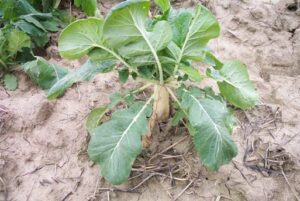
Scientific Name: Raphanus sativus
Life Cycle: Cool Season Annual
Growth Habit: Upright
Preferred Soil pH: 6.0-7.5 Min.
Germination Temp.:45F
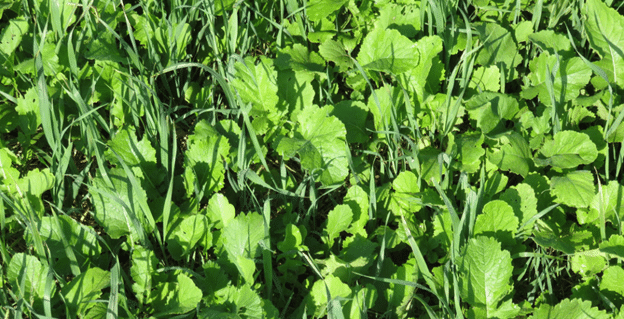
Upright, cool-season annual that grows 12-18 inches tall. Has basal rosette of dissected leaves; purple, light purple, pink, or white flowers; and a deep taproot.
Additional Resources:
For more region specific information, each cover crop species can be found in the cover crop decision tool by name.
Brassicas & mustards overview: Managing Cover Crops Profitably (SARE Handbook Series Book 9) by Andy Clark (2007, 3rd ed.)
Turnip
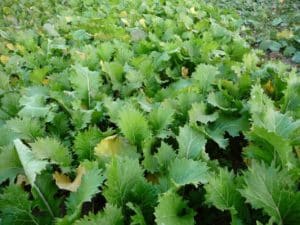
Scientific Name: Brassica rapa
Life Cycle: Cool Season Annual
Growth Habit: Upright
Preferred Soil pH: 5.3-6.8 Min.
Germination Temp.: 45F
Upright, cool-season annual or biennial in areas where winter-kill fails to reliably occur. Has broad leaves with prominent midribs.
Additional Resources:
For more region specific information, each cover crop species can be found in the cover crop decision tool by name.
Brassicas & mustards overview: Managing Cover Crops Profitably (SARE Handbook Series Book 9) by Andy Clark (2007, 3rd ed.)
Mustard

Scientific Name: Brassica juncea, Brassica carinata, Sinapsis spp.
Life Cycle: Cool Season Annual
Growth Habit: Upright
Preferred Soil pH: 5.5-8.3 Min.
Germination Temp.: 40F
Quick growing, cool-season annual that grow 3-5 ft tall. Have narrow leaves, yellow flowers, a strong taproot, and fibrous lateral roots. Includes yellow mustard, brown mustard, and more.
Additional Resources:
For more region specific information, each cover crop species can be found in the cover crop decision tool by name.
Brassicas & mustards overview: Managing Cover Crops Profitably (SARE Handbook Series Book 9) by Andy Clark (2007, 3rd ed.)
Rapeseed/canola

Scientific Name: Brassica napus
Life Cycle: Winter Annual
Growth Habit: Upright
Preferred Soil pH: 5.5-8.0 Min.
Germination Temp.: 41F
Upright cool-season or winter annual that grow 3-5 feet tall. They have narrow leaves, yellow flowers, a strong taproot, and fibrous and lateral roots. Canola is a type of rapeseed developed for seed quality and in not generally recommended as a cover crop.
Additional Resources:
For more region specific information, each cover crop species can be found in the cover crop decision tool by name.
Brassicas & mustards overview: Managing Cover Crops Profitably (SARE Handbook Series Book 9) by Andy Clark (2007, 3rd ed.)
Winter Camelina (Gold of Pleasure, False Flax)

Photo credit: Marisol Berti
Scientific Name: Camelina sativa
Life Cycle: Winter Annual
Growth Habit: Upright
Preferred Soil pH: 5.5-6.5
Germination Temp.: 41F
Upright cool-season or winter annual that grow 1-3 feet tall. Grows in a rosette in the fall and overwinters as a rosette. Bolts in the spring.
Additional Resources:
For more region specific information, each cover crop species can be found in the cover crop decision tool by name.
Brassicas & mustards overview: Managing Cover Crops Profitably (SARE Handbook Series Book 9) by Andy Clark (2007, 3rd ed.)