October 2020
Authors: Gared Shaffer, David Karki, Anthony Bly, Ruth Beck, Sara Bauder, Paul O. Johnson- SDSU Extension
Source: SDSU Extension
Midwest Cover Crops Council (MCCC-136)
University of Nebraska Extension (G2351)
This publication is intended to provide a starting point for farmers who are new to growing cover crops. With experience, farmers may fine-tune the use of cover crops for their systems.
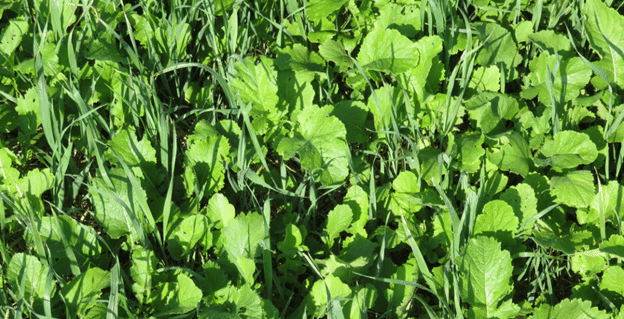
This publication provides an introductory approach to integrating cover crops following corn silage and before corn or soybeans. These cover crops can have many benefits, such as erosion control, weed suppression, improved soil health, and quality forage production.
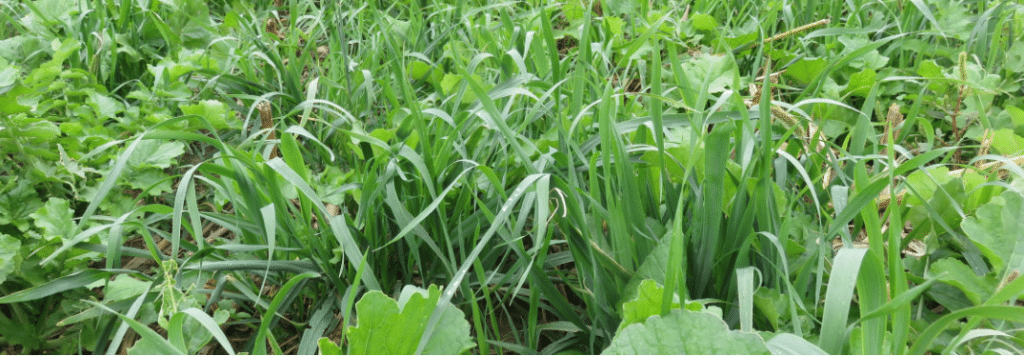
Cover Crop Selector Tool —available from the Midwest Cover Crops Council, https://www.midwestcovercrops.org
Post Corn, Going to Soybean: Use Cereal Rye (Nebraska Cover Crop Recipe series, MCCC-107)
Post Corn Silage, Going to Corn: Use Cereal Rye (Iowa Cover Crop Recipe series, MCCC-121)
Post Corn Silage, Going to Soybean: Use Cereal Rye (Iowa Cover Crop Recipe series, MCCC-122)
Managing Residual Herbicides with Cover Crops (Institute of Agriculture and Natural Resources, Univ. of Nebraska)
How Herbicide Labels Restrict Using Cover Crops as Forage (Institute of Agriculture and Natural Resources, Univ. of Nebraska)
Corn and Soybean Herbicide Options for Planting Cover Crops for Forage in Fall (Institute of Agriculture and Natural Resources, Univ. of Nebraska)
Residual Herbicides and Fall Cover Crop Establishment (Purdue Extension Weed Science publication)
Terminating Cover Crops: Successful Cover Crop Termination with Herbicides (Purdue Extension publication WS-50-W)
Gary Lesoing and Katja Koehler-Cole, University of Nebraska-Lincoln (Note: This publication was adapted with consent from MCCC under a joint project to produce customized introductory guidance about cover crops for all member states/provinces.)
Caro Córdova, Nathan Mueller, and Jennifer Rees, University of Nebraska-Lincoln; Eileen Kladivko, Purdue University; Anna Morrow, Midwest Cover Crops Council
The Midwest Cover Crops Council (www.midwestcovercrops.org) aims to facilitate widespread adoption of cover crops throughout the Midwest by providing educational/outreach resources and programs, conducting new research, and communicating about cover crops to the public.
Funding for this project was provided by McKnight Foundation.
December 2022
The U.S. Department of Agriculture (USDA) prohibits discrimination in all its programs and activities on the basis of race, color, national origin, age, disability, and where applicable, sex, marital status, familial status, parental status, religion, sexual orientation, genetic information, political beliefs, reprisal, or because all or a part of an individual’s income is derived from any public assistance program. (Not all prohibited bases apply to all programs.) Persons with disabilities who require alternative means for communication of program information (Braille, large print, audiotape, etc.) should contact USDA’s TARGET Center at (202) 720-2600 (voice and TDD). To file a complaint of discrimination write to USDA, Director, Office of Civil Rights, 1400 Independence Avenue, S.W., Washington, D.C. 20250-9410 or call (800) 795-3272 (voice) or (202) 720-6382 (TDD). USDA is an equal opportunity provider and employer. ©2022 by MCCC. All rights reserved.
Midwest Cover Crops Council (MCCC-137)
University of Nebraska Extension (G2352)
This publication is intended to provide a starting point for farmers who are new to growing cover crops. With experience, farmers may fine-tune the use of cover crops for their systems.
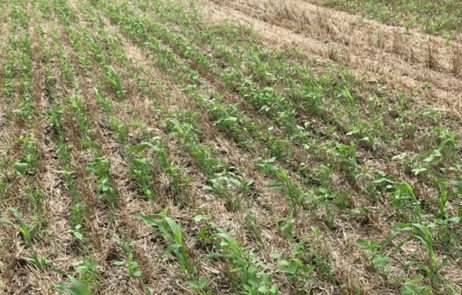
This publication provides an introductory approach to integrating cover crops following wheat and before corn or soybeans. These cover crops can have many benefits, such as erosion control, improved soil health, weed suppression, and quality forage production.
Cover Crop Selector Tool —available from the Midwest Cover Crops Council, https://www.midwestcovercrops.org
Post Corn, Going to Soybean: Use Cereal Rye (Nebraska Cover Crop Recipe series, MCCC-107)
Post Corn Silage, Going to Corn: Use Cereal Rye (Iowa Cover Crop Recipe series, MCCC-121)
Post Corn Silage, Going to Soybean: Use Cereal Rye (Iowa Cover Crop Recipe series, MCCC-122)
Managing Residual Herbicides with Cover Crops (Institute of Agriculture and Natural Resources, Univ. of Nebraska)
How Herbicide Labels Restrict Using Cover Crops as Forage (Institute of Agriculture and Natural Resources, Univ. of Nebraska)
Corn and Soybean Herbicide Options for Planting Cover Crops for Forage in Fall (Institute of Agriculture and Natural Resources, Univ. of Nebraska)
Residual Herbicides and Fall Cover Crop Establishment (Purdue Extension Weed Science publication)
Terminating Cover Crops: Successful Cover Crop Termination with Herbicides (Purdue Extension publication WS-50-W)
Wheat Stem Maggot Adult Monitoring: A Pest of Cover Crop-to-Corn Transitions (Institute of Agriculture and Natural Resources, Univ. of Nebraska)
Research Update on Cover Crops after Winter Wheat Harvest (Institute of Agriculture and Natural Resources, Univ. of Nebraska)
Gary Lesoing and Katja Koehler-Cole, University of Nebraska-Lincoln (Note: This publication was adapted with consent from MCCC under a joint project to produce customized introductory guidance about cover crops for all member states/provinces.)
Caro Córdova, Nathan Mueller, and Jennifer Rees, University of Nebraska-Lincoln; Eileen Kladivko, Purdue University; Anna Morrow, Midwest Cover Crop Council
The Midwest Cover Crops Council (www.midwestcovercrops.org) aims to facilitate widespread adoption of cover crops throughout the Midwest by providing educational/outreach resources and programs, conducting new research, and communicating about cover crops to the public.
Funding for this project was provided by McKnight Foundation.
December 2022
The U.S. Department of Agriculture (USDA) prohibits discrimination in all its programs and activities on the basis of race, color, national origin, age, disability, and where applicable, sex, marital status, familial status, parental status, religion, sexual orientation, genetic information, political beliefs, reprisal, or because all or a part of an individual’s income is derived from any public assistance program. (Not all prohibited bases apply to all programs.) Persons with disabilities who require alternative means for communication of program information (Braille, large print, audiotape, etc.) should contact USDA’s TARGET Center at (202) 720-2600 (voice and TDD). To file a complaint of discrimination write to USDA, Director, Office of Civil Rights, 1400 Independence Avenue, S.W., Washington, D.C. 20250-9410 or call (800) 795-3272 (voice) or (202) 720-6382 (TDD). USDA is an equal opportunity provider and employer. ©2022 by MCCC. All rights reserved.
Midwest Cover Crops Council (MCCC-138)
Purdue Extension (AY-368-W)
This publication is intended to provide a starting point for farmers who are new to growing cover crops. With experience, farmers may fine-tune the use of cover crops for their systems.
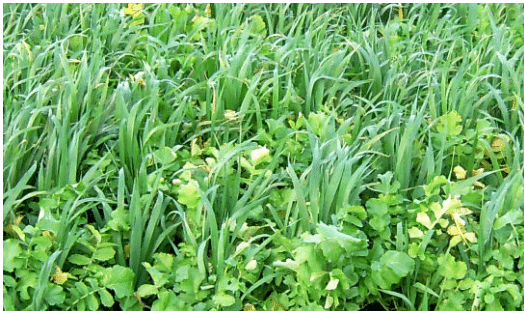
The following recipe provides an introductory approach to integrating a cover crop into a wheat rotation with soybean or corn. Planting oat and daikon-type radish cover crops after wheat (see Figure 1) and ahead of a soybean or corn cash crop is an easy way to introduce cover crops into your rotation because these cover crops both winter-kill and add important diversity to agricultural fields.
Cover Crop Selector Tool —available from the Midwest Cover Crops Council
Residual Herbicides and Fall Cover Crop Establishment (Purdue Extension Weed Science publication)
Anna Morrow, Midwest Cover Crops Council; Shalamar Armstrong, Keith Johnson, Eileen Kladivko, and Dan Quinn, Purdue University (Note: This publication was adapted with consent from MCCC under a joint project to produce customized introductory guidance about cover crops for all member states/provinces.)
Barry Fisher, retired USDA–Natural Resources Conservation Service, Fisher Soil Health
December 2022
The U.S. Department of Agriculture (USDA) prohibits discrimination in all its programs and activities on the basis of race, color, national origin, age, disability, and where applicable, sex, marital status, familial status, parental status, religion, sexual orientation, genetic information, political beliefs, reprisal, or because all or a part of an individual’s income is derived from any public assistance program. (Not all prohibited bases apply to all programs.) Persons with disabilities who require alternative means for communication of program information (Braille, large print, audiotape, etc.) should contact USDA’s TARGET Center at (202) 720-2600 (voice and TDD). To file a complaint of discrimination write to USDA, Director, Office of Civil Rights, 1400 Independence Avenue, S.W., Washington, D.C. 20250-9410 or call (800) 795-3272 (voice) or (202) 720-6382 (TDD). USDA is an equal opportunity provider and employer. ©2022 by MCCC. All rights reserved.
Midwest Cover Crops Council (MCCC-135)
This publication is intended to provide a starting point for farmers who are new to growing cover crops. With experience, farmers may fine-tune the use of cover crops for their systems.
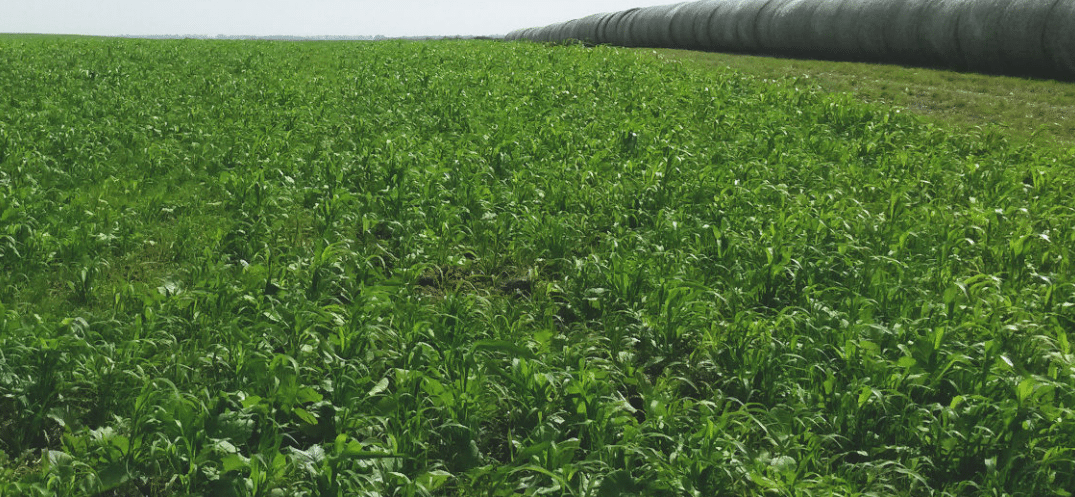
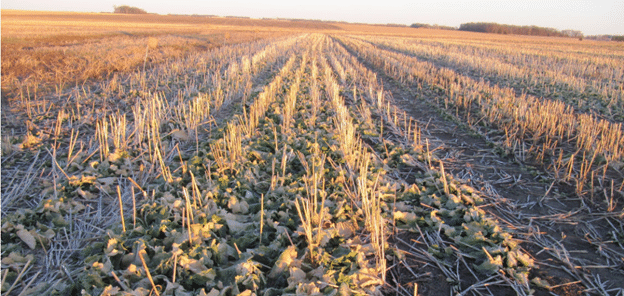
The following recipe provides an introductory approach to integrating a cover crop into a wheat-based rotation with soybean or corn. Planting a cover crop blend that predominantly consists of cool-season species and is winter-killed adds diversity and provides soil armor through summer and spring. However, in some situations added ground cover in the spring in combination with excess soil moisture could be a problem unless winter cereals (winter rye, wheat, or triticale) are included in the mix.
Cover Crop Selector Tool—available from the Midwest Cover Crops Council, www.midwestcovercrops.org
Cover Crop Species Selection for Grazing (USDA-NRCS publication SD-FS-56)
Herbicide Residual Effects on Cover Crops after Wheat (South Dakota State University Extension)
Cover Crop: Common Species and Properties of South Dakota (USDA-NRCS)
Grazing Cover Crop Calculation App (Jotform app)
David Karki, South Dakota State University Extension (Note: This publication was adapted with consent from MCCC under a joint project to produce customized introductory guidance about cover crops for all member states/provinces.)
Eric Barsness, USDA-NRCS; Anthony Bly, South Dakota State University Extension; Eileen Kladivko, Purdue University; Anna Morrow, Midwest Cover Crops Council
The Midwest Cover Crops Council (www.midwestcovercrops.org) aims to facilitate widespread adoption of cover crops throughout the Midwest by providing educational/outreach resources and programs, conducting new research, and communicating about cover crops to the public.
Funding for this project was provided by McKnight Foundation.
December 2022
The U.S. Department of Agriculture (USDA) prohibits discrimination in all its programs and activities on the basis of race, color, national origin, age, disability, and where applicable, sex, marital status, familial status, parental status, religion, sexual orientation, genetic information, political beliefs, reprisal, or because all or a part of an individual’s income is derived from any public assistance program. (Not all prohibited bases apply to all programs.) Persons with disabilities who require alternative means for communication of program information (Braille, large print, audiotape, etc.) should contact USDA’s TARGET Center at (202) 720-2600 (voice and TDD). To file a complaint of discrimination write to USDA, Director, Office of Civil Rights, 1400 Independence Avenue, S.W., Washington, D.C. 20250-9410 or call (800) 795-3272 (voice) or (202) 720-6382 (TDD). USDA is an equal opportunity provider and employer. ©2022 by MCCC. All rights reserved.
Midwest Cover Crops Council (MCCC-129)
University of Guelph (SAG-FS-21-003)
This publication is intended to provide a starting point for farmers who are new to growing cover crops. With experience, many farmers fine-tune the use of cover crops for their systems.
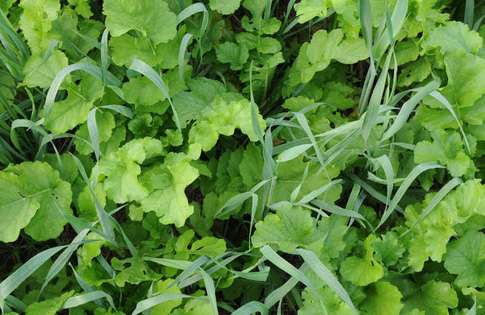
This recipe provides an introductory approach to integrating a cover crop mix of oats and radish after an early harvested processing vegetable, such as snap beans, cucumbers, peas, or early tomatoes. Both oat and radish can successfully establish in late summer to early fall and usually winter-kill. It is a low-risk mix that will help control tough perennial or winter annual weeds, minimize erosion, build soil structure, reduce compaction, and add some extra diversity to your rotation.
Cover Crop Selector Tool —available from Midwest Cover Crops Council
Best Management Practices: Winter Cover Crops (OMAFRA)
Cover Crop Seed Suppliers (OMAFRA)
Use and Management of Manure and Other Organic and/or Prescribed Materials (Ontario Soil and Crop Improvement Association Infosheet #17)
Guide to Weed Control: Hort Crops (OMAFRA publication 75B)
Vegetable Crop Protection Guide (OMAFRA publication 838)
Vegetable Production Information—Commercial Vegetable Production (OMAFRA)
Jordan Grigg, Cameron Ogilvie, and Laura Van Eerd, University of Guelph; and Anne Verhallen, OMAFRA (Note: This publication was adapted with consent from MCCC under a joint project to produce customized introductory guidance about cover crops for all member states/provinces.)
Kris McNaughton, University of Guelph, and Elaine Roddy, OMAFRA
November 2021
The U.S. Department of Agriculture (USDA) prohibits discrimination in all its programs and activities on the basis of race, color, national origin, age, disability, and where applicable, sex, marital status, familial status, parental status, religion, sexual orientation, genetic information, political beliefs, reprisal, or because all or a part of an individual’s income is derived from any public assistance program. (Not all prohibited bases apply to all programs.) Persons with disabilities who require alternative means for communication of program information (Braille, large print, audiotape, etc.) should contact USDA’s TARGET Center at (202) 720-2600 (voice and TDD). To file a complaint of discrimination write to USDA, Director, Office of Civil Rights, 1400 Independence Avenue, S.W., Washington, D.C. 20250-9410 or call (800) 795-3272 (voice) or (202) 720-6382 (TDD). USDA is an equal opportunity provider and employer. ©2021 by MCCC. All rights reserved.
Midwest Cover Crops Council (MCCC-128)
University of Guelph (SAG-FS-21-003)
This publication is intended to provide a starting point for farmers who are new to growing cover crops. With experience, many farmers fine-tune the use of cover crops for their systems.
This recipe provides an introductory approach to integrating a cover crop mix of oats and radish after wheat harvest going to corn or soybean the next year. Since both oat and radish can be sown after wheat harvest and usually winter-kill, it is a low-risk mix that will help control tough perennial weeds, minimize erosion, build soil structure, reduce compaction, and add some extra diversity to your rotation.
Best Management Practices: Winter Cover Crops (OMAFRA)
Agronomy Guide for Field Crops (OMAFRA publication 811)
Cover Crop Selector Tool —available from Midwest Cover Crops Council
Use and Management of Manure and Other Organic and/or Prescribed Materials (Ontario Soil and Crop Improvement Association Infosheet #17)
Jordan Grigg, Cameron Ogilvie, and Laura Van Eerd, University of Guelph; and Anne Verhallen, OMAFRA (Note: This publication was adapted with consent from MCCC under a joint project to produce customized introductory guidance about cover crops for all member states/provinces.)
Joanna Follings, OMAFRA; David Hooker, University of Guelph; Tatianna Lozier, Upper Thames River Conservation Authority; Anne Vanasse, Université Laval; Marty Vermey, Grain Farmers of Ontario
July 2021
The U.S. Department of Agriculture (USDA) prohibits discrimination in all its programs and activities on the basis of race, color, national origin, age, disability, and where applicable, sex, marital status, familial status, parental status, religion, sexual orientation, genetic information, political beliefs, reprisal, or because all or a part of an individual’s income is derived from any public assistance program. (Not all prohibited bases apply to all programs.) Persons with disabilities who require alternative means for communication of program information (Braille, large print, audiotape, etc.) should contact USDA’s TARGET Center at (202) 720-2600 (voice and TDD). To file a complaint of discrimination write to USDA, Director, Office of Civil Rights, 1400 Independence Avenue, S.W., Washington, D.C. 20250-9410 or call (800) 795-3272 (voice) or (202) 720-6382 (TDD). USDA is an equal opportunity provider and employer. ©2021 by MCCC. All rights reserved.