Anna Cates – University of Minnesota
February 2020
Anna Cates – University of Minnesota
February 2020
Kim Cassida – Michigan State University
February 2020
DeAnn Presley – Kansas State University
February 2020
Nathan Johanning – University of Illinois Extension
February 2020
Shalamar Armstrong – Purdue University
February 2020

Midwest Cover Crops Council (MCCC-122)
Iowa State University Extension (CROP 3166)
This publication is intended to provide a starting point for farmers who are new to growing cover crops. With experience, farmers may fine-tune the use of cover crops for their systems.
The following recipe provides an introductory approach to integrating a cover crop into a corn silage–soybean rotation. The early harvest of corn silage provides an extended planting window for establishing a cereal rye cover crop.
Cover Crop Selector Tool —available from Midwest Cover Crops Council
Effect of residual herbicides on cover crop establishment (Iowa State Extension and Outreach Integrated Crop Management Encyclopedia Article)
Herbicide Use May Restrict Grazing Options for Cover Crops (Iowa State Extension and Outreach publication CROP 3082, revised January 2017)
NRCS Cover Crop Termination Guidelines (version 4, June 2019)—available from the USDA Natural Resources Conservation Service
Planting Winter Rye after Corn Silage: Managing for Forage, J. Stute, K. Shelley, D. Mueller, and T. Wood. 2009.
Cover Crop Management (Iowa Agronomy Technical Note 38)—available from the USDA Natural Resources Conservation Service
Post Soybean, Going to Corn: Use Oats (Iowa Cover Crop Recipe series, MCCC-104)
Post Corn, Going to Soybean: Use Cereal Rye (Iowa Cover Crop Recipe series, MCCC-103)
Tom Kaspar, USDA-ARS (retired); and Mark Licht, Iowa State University (Note: This publication was adapted with consent from MCCC under a joint project to produce customized introductory guidance about cover crops for all member states/provinces.)
Stefan Gailans, Practical Farmers of Iowa; Michael Henderson and Kevin Kuhn, USDA-NRCS; Eileen Kladivko, Purdue University; Keith Kohler, USDA-ARS; Anna Morrow, Midwest Cover Crops Council; and Matt Ruark, Kevin Shelley, and Dan Smith, University of Wisconsin-Madison
This publication was developed with contributions and collaboration from Iowa Learning Farms and Practical Farmers of Iowa.
March 2020
The U.S. Department of Agriculture (USDA) prohibits discrimination in all its programs and activities on the basis of race, color, national origin, age, disability, and where applicable, sex, marital status, familial status, parental status, religion, sexual orientation, genetic information, political beliefs, reprisal, or because all or a part of an individual’s income is derived from any public assistance program. (Not all prohibited bases apply to all programs.) Persons with disabilities who require alternative means for communication of program information (Braille, large print, audiotape, etc.) should contact USDA’s TARGET Center at (202) 720-2600 (voice and TDD). To file a complaint of discrimination write to USDA, Director, Office of Civil Rights, 1400 Independence Avenue, S.W., Washington, D.C. 20250-9410 or call (800) 795-3272 (voice) or (202) 720-6382 (TDD). USDA is an equal opportunity provider and employer. ©2020 by MCCC. All rights reserved.
Midwest Cover Crops Council (MCCC-121)
Iowa State University Extension (CROP 3165)
This publication is intended to provide a starting point for farmers who are new to growing cover crops. With experience, farmers may fine-tune the use of cover crops for their systems.
The following recipe provides an introductory approach for planting a cover crop after corn silage harvest and then planting corn for grain or silage as the next crop. The early harvest of corn silage provides an extended planting window for establishing a cereal rye cover crop.
Cover Crop Selector Tool —available from Midwest Cover Crops Council
Effect of residual herbicides on cover crop establishment (Iowa State Extension and Outreach Integrated Crop Management Encyclopedia Article)
Herbicide Use May Restrict Grazing Options for Cover Crops (Iowa State Extension and Outreach publication CROP 3082, revised January 2017)
NRCS Cover Crop Termination Guidelines (version 4, June 2019)—available from the USDA Natural Resources Conservation Service
Planting Winter Rye after Corn Silage: Managing for Forage, J. Stute, K. Shelley, D. Mueller, and T. Wood. 2009.
Cover Crop Management (Iowa Agronomy Technical Note 38)—available from the USDA Natural Resources Conservation Service
Post Soybean, Going to Corn: Use Oats (Iowa Cover Crop Recipe series, MCCC-104)
Post Corn, Going to Soybean: Use Cereal Rye (Iowa Cover Crop Recipe series, MCCC-103)
Tom Kaspar, USDA-ARS (retired); and Mark Licht, Iowa State University (Note: This publication was adapted with consent from MCCC under a joint project to produce customized introductory guidance about cover crops for all member states/provinces.)
Stefan Gailans, Practical Farmers of Iowa; Michael Henderson and Kevin Kuhn, USDA-NRCS; Eileen Kladivko, Purdue University; Keith Kohler, USDA-ARS; Anna Morrow, Midwest Cover Crops Council; and Matt Ruark, Kevin Shelley, and Dan Smith, University of Wisconsin-Madison
This publication was developed with contributions and collaboration from Iowa Learning Farms and Practical Farmers of Iowa.
March 2020
The U.S. Department of Agriculture (USDA) prohibits discrimination in all its programs and activities on the basis of race, color, national origin, age, disability, and where applicable, sex, marital status, familial status, parental status, religion, sexual orientation, genetic information, political beliefs, reprisal, or because all or a part of an individual’s income is derived from any public assistance program. (Not all prohibited bases apply to all programs.) Persons with disabilities who require alternative means for communication of program information (Braille, large print, audiotape, etc.) should contact USDA’s TARGET Center at (202) 720-2600 (voice and TDD). To file a complaint of discrimination write to USDA, Director, Office of Civil Rights, 1400 Independence Avenue, S.W., Washington, D.C. 20250-9410 or call (800) 795-3272 (voice) or (202) 720-6382 (TDD). USDA is an equal opportunity provider and employer. ©2020 by MCCC. All rights reserved.
Midwest Cover Crops Council (MCCC-119)
This publication is intended to provide a starting point for farmers who are new to growing cover crops. With experience, farmers may fine-tune the use of cover crops for their systems.
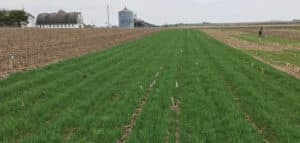
The following recipe provides an introductory approach to integrating a cover crop into a corn silage-soybean rotation.
Cover Crop Selector Tool —available from Midwest Cover Crops Council
Cover Crops 101 (University of Wisconsin–Madison Extension publication A4176)
Herbicide Rotational Restrictions for Cover and Forage Cropping Systems (University of Wisconsin–Madison Nutrient and Pest Management publication)
NRCS Cover Crop Termination Guidelines (version 4, June 2019)—available from the USDA–National Resources Conservation Service
Cover Crops, Manure, and Nitrogen Management (University of Wisconsin–Madison Extension publication A4178)
Planting Winter Rye after Corn Silage: Managing for Forage (University of Wisconsin–Madison Nutrient and Pest Management publication)
Termination of Winter Rye and Annual Ryegrass Using Glyphosate (University of Wisconsin–Madison Nutrient and Pest Management publication)
Matt Ruark, Daniel H. Smith, and Kevin Shelley, University of Wisconsin–Madison (Note: This publication was adapted with consent from MCCC under a joint project to produce customized introductory guidance about cover crops for all member states/provinces.)
Brian Briski, USDA-NRCS; Jason Cavadini, University of Wisconsin–Madison; Tom Kaspar, USDA-ARS (retired); Eileen Kladivko, Purdue University; and Anna Morrow, Midwest Cover Crops Council
January 2020
The U.S. Department of Agriculture (USDA) prohibits discrimination in all its programs and activities on the basis of race, color, national origin, age, disability, and where applicable, sex, marital status, familial status, parental status, religion, sexual orientation, genetic information, political beliefs, reprisal, or because all or a part of an individual’s income is derived from any public assistance program. (Not all prohibited bases apply to all programs.) Persons with disabilities who require alternative means for communication of program information (Braille, large print, audiotape, etc.) should contact USDA’s TARGET Center at (202) 720-2600 (voice and TDD). To file a complaint of discrimination write to USDA, Director, Office of Civil Rights, 1400 Independence Avenue, S.W., Washington, D.C. 20250-9410 or call (800) 795-3272 (voice) or (202) 720-6382 (TDD). USDA is an equal opportunity provider and employer. ©2020 by MCCC. All rights reserved.
Midwest Cover Crops Council (MCCC-118)
This publication is intended to provide a starting point for farmers who are new to growing cover crops. With experience, farmers may fine-tune the use of cover crops for their systems.
The following recipe provides an introductory approach to integrating a cover crop after corn silage harvest and planting corn for grain or silage as the next crop.
Cover Crop Selector Tool —available from Midwest Cover Crops Council
Cover Crops 101 (University of Wisconsin–Madison Extension publication A4176)
Herbicide Rotational Restrictions for Cover and Forage Cropping Systems (University of Wisconsin–Madison Nutrient and Pest Management publication)
NRCS Cover Crop Termination Guidelines (version 4, June 2019)—available from the USDA–National Resources Conservation Service
Cover Crops, Manure, and Nitrogen Management (University of Wisconsin–Madison Extension publication A4178)
Planting Winter Rye after Corn Silage: Managing for Forage (University of Wisconsin–Madison Nutrient and Pest Management publication)
Termination of Winter Rye and Annual Ryegrass Using Glyphosate (University of Wisconsin–Madison Nutrient and Pest Management publication)
Matt Ruark, Daniel H. Smith, and Kevin Shelley, University of Wisconsin–Madison (Note: This publication was adapted with consent from MCCC under a joint project to produce customized introductory guidance about cover crops for all member states/provinces.)
Brian Briski, USDA-NRCS; Jason Cavadini, University of Wisconsin–Madison; Tom Kaspar, USDA-ARS (retired); Eileen Kladivko, Purdue University; and Anna Morrow, Midwest Cover Crops Council
January 2020
The U.S. Department of Agriculture (USDA) prohibits discrimination in all its programs and activities on the basis of race, color, national origin, age, disability, and where applicable, sex, marital status, familial status, parental status, religion, sexual orientation, genetic information, political beliefs, reprisal, or because all or a part of an individual’s income is derived from any public assistance program. (Not all prohibited bases apply to all programs.) Persons with disabilities who require alternative means for communication of program information (Braille, large print, audiotape, etc.) should contact USDA’s TARGET Center at (202) 720-2600 (voice and TDD). To file a complaint of discrimination write to USDA, Director, Office of Civil Rights, 1400 Independence Avenue, S.W., Washington, D.C. 20250-9410 or call (800) 795-3272 (voice) or (202) 720-6382 (TDD). USDA is an equal opportunity provider and employer. ©2020 by MCCC. All rights reserved.