Grasses

Midwest Cover Crops Council (MCCC-120)

Kansas State University Extension (MF3504)


Introduction

This publication provides a starting point for farmers who are new to growing cover crops. With experience, farmers may fine-tune the use of cover crops for their systems.

Planning and Preparation
  • Planning—Start early. Educate yourself. Start small. Be timely. Prioritize management based on your purpose and objectives.
  • Corn hybrid and planting—If possible, plant the preceding corn crop early and use an early maturity corn hybrid. One strategy would be to use a cover crop on the field you usually harvest first, on sloping ground, or on a field where you can watch it regularly, and to plant your earliest maturity hybrid on that field.
  • Residual corn herbicides—Cereal rye can be seeded, and a successful stand will occur, in the fall following most of the spring-applied residuals used in corn. However, if cereal rye will be grazed or fed to livestock, there are some restrictions. See the USDA-NRCS Cover Crop Termination Guidelines (in Resources), or consult your agricultural chemical supplier or agronomist for potential carryover herbicide concerns.
  • Seed purchase—Order cereal rye seed early. Named varieties can produce substantially more growth or more predictable growth and maturity but are more expensive than VNS (variety not stated) seed. Start with VNS seed with a good germination rate that is purchased from a reputable seed dealer. This means seed has been cleaned, tested for germination, and has a seed tag even though it is VNS.
Fall Work
  • Corn harvest—Harvest the crop as early as possible in fields to be planted to cereal rye.
  • Tillage or no-tillage—To allow for adequate cover crop growth, it is best or easier if no full-width tillage is planned for after rye planting or before intended rye termination date. Thus, it is easier to integrate cover crops into no-till or strip-till systems.
  • Timing of planting—Plant cereal rye as soon after corn harvest as possible. Use the Cover Crop Selector Tool (in Resources) to find planting dates for your county. For most of Kansas, plant no later than November 1.
  • Seeding rate—The recommended drilled seeding rate is 55 to 60 pounds per acre; if seeded with an airplane, the rates should be 1.5 times the drilled rate (required if participating in USDA-NRCS programs). These rates are based on high-quality seed with germination rates of 85 to 98%. Increase rates with later plantings.
  • Planting method—Drill seed 0.75 to 1.50 inches deep or broadcast with shallow incorporation.
  • Fertility or liming—If applying P, K, or lime, apply before the seeding operation or apply to the growing rye before the ground freezes. If it is necessary to inject manure, low-disturbance injectors are available that cause minimal damage to the cereal rye. Surface application of liquid manure on top of the rye is not recommended. Ideally, surface broadcast of dry manure or litter should be done before seeding but, if necessary, could be applied to growing cereal rye with minimal damage.
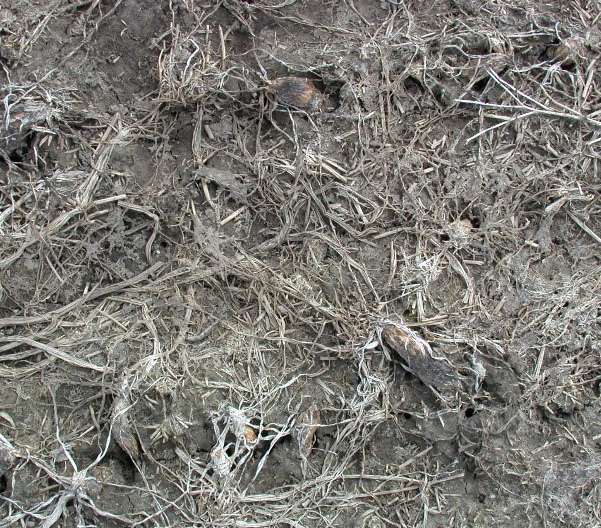
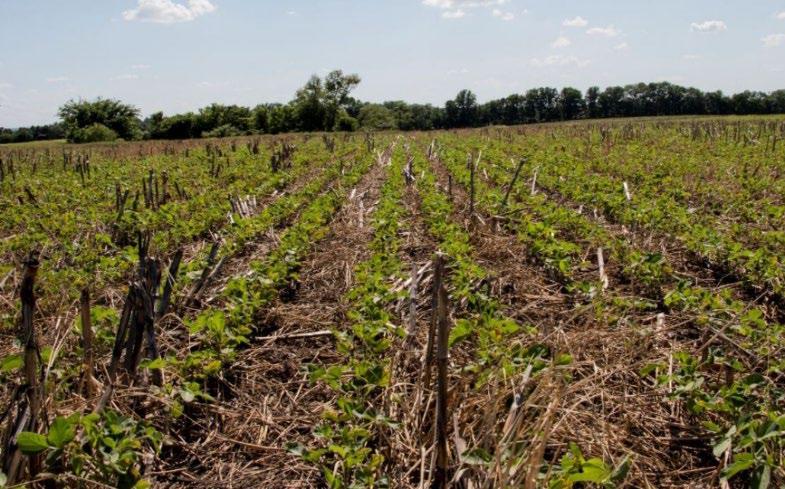
Figure 1. After it’s terminated, a cereal rye crop can be part of an effective weed-management program and can help reduce evaporation during the growing season of the soybean crop. (DeAnn Presley)
Spring Work
  • Scouting—In the spring, scout your cover crop to determine how well it is growing and its coverage. Also, scout to monitor soil moisture; if rainfall is below normal, then earlier termination may be needed to preserve moisture.
  • Termination timing—Terminate the cereal rye in the spring in compliance with USDA–Risk Management Agency rules:

› Zone 1: Terminate cover crop 35 days or earlier before planting. › Zone 2: Terminate cover crop 15 days or earlier before planting. › Zone 3: Terminate cover crop at or before planting. › Zone 4: Terminate cover crop at or within 5 days after planting but before crop emergence.

  • Termination herbicide—Cereal rye can easily be terminated with a full rate of glyphosate (1 pound acid equivalent per acre) after dormancy breaks in the spring. Effectiveness and rapidity of termination improves if rye is rapidly growing and air temperatures are warmer. Tank mixes with products containing metribuzen may antagonize glyphosate performance and may justify an increase in the glyphosate rate.
  • Termination modifications for dry weather—Watch the weather and be ready to modify your termination plans, particularly on non-irrigated acres. In a dry spring, the cereal rye cover crop has the potential to use moisture that the cash crop will need, so terminate cover crops sooner to allow rainfall to make up the deficit.
  • Termination modifications for wet weather—In a wet spring, be ready to take advantage of any break in the weather and/or use low axle weight sprayers. If projected soybean planting is less than 10 days away and the rye is tall, then it often works better to spray within a day or two of planting. It is usually better to either plant into brown dead rye plants or into standing green plants rather than into large, dying, yellow/green (“rubbery”) cereal rye plants that have fallen on the soil surface and formed a mat.
  • Soybean planting—It is usually best to no-till plant soybeans into either a dead/dry or standing cereal rye cover crop. Almost all modern planters and drills are fully capable of planting soybeans into a cereal rye cover crop. Check planting depth and seed furrow closure shortly after beginning to plant into the cover crop residue as usually some adjustments are needed.
  • Scouting—After soybean planting, scout for soybean emergence and population. Additionally, scout for weeds since substantial cereal rye residue can delay emergence of annual weeds, which may delay the application of post-emergence herbicides.
  • Additional guidelines—If you are in one of the major wheat-growing areas of Kansas, watch for equipment contamination to ensure that no rye escapes and goes to seed in your field. Also, make sure you do a thorough and complete burndown in spring to ensure that none of the rye goes to seed.
Resources

Cover Crop Selector Tool,  — available from Midwest Cover Crops Council

USDA-NRCS Cover Crop Termination Guidelines, available on the USDA–Risk Management Agency website

Authors

DeAnn Presley, Kansas State University; and Vaughn Sothman, Sharp Brothers Seed Company (Note: This publication was adapted with consent from MCCC under a joint project to produce customized introductory guidance about cover crops for all member states/provinces.)

Reviewers and Contributors

Shalamar Armstrong, Purdue University; Marisol Berti, North Dakota State University; Tom Kaspar, USDA–Agricultural Research Service (retired); Eileen Kladivko, Purdue University; Anna Morrow, Midwest Cover Crops Council; Tom Roth, USDA-NRCS; and Anne Verhallen, Ontario Ministry of Agriculture, Food and Rural Affairs

The Midwest Cover Crops Council (www.https://www.midwestcovercrops.org) aims to facilitate widespread adoption of cover crops throughout the Midwest by providing educational/outreach resources and programs, conducting new research, and communicating about cover crops to the public.
Funding for this project was provided by McKnight Foundation.

May 2020

The U.S. Department of Agriculture (USDA) prohibits discrimination in all its programs and activities on the basis of race, color, national origin, age, disability, and where applicable, sex, marital status, familial status, parental status, religion, sexual orientation, genetic information, political beliefs, reprisal, or because all or a part of an individual’s income is derived from any public assistance program. (Not all prohibited bases apply to all programs.) Persons with disabilities who require alternative means for communication of program information (Braille, large print, audiotape, etc.) should contact USDA’s TARGET Center at (202) 720-2600 (voice and TDD). To file a complaint of discrimination write to USDA, Director, Office of Civil Rights, 1400 Independence Avenue, S.W., Washington, D.C. 20250-9410 or call (800) 795-3272 (voice) or (202) 720-6382 (TDD). USDA is an equal opportunity provider and employer. ©2020 by MCCC. All rights reserved.

Share

Midwest Cover Crops Council (MCCC-122)

Iowa State University Extension (CROP 3166)


This publication is intended to provide a starting point for farmers who are new to growing cover crops. With experience, farmers may fine-tune the use of cover crops for their systems.

Introduction

The following recipe provides an introductory approach to integrating a cover crop into a corn silage–soybean rotation. The early harvest of corn silage provides an extended planting window for establishing a cereal rye cover crop.

Planning and Preparation
  • Planning—Read about cover crops. Go to field days. Start small. Be timely. Prioritize management based on purpose and objectives. Arrange for equipment, custom operators, or additional labor as needed.
  • Corn hybrid and planting—If possible, plant preceding corn silage crop early, and use a hybrid within the adapted maturity range for your location.
  • Residual corn herbicides—Cereal rye can be planted in the fall and produce a successful stand following most spring-applied residual corn herbicides. If cereal rye is grazed or harvested for forage, there are some time-interval restrictions. (See Herbicide Use May Restrict Grazing Options for Cover Crops -Resources.)
  • Seed purchase—Pre-order cereal rye seed in early summer. Named rye varieties can produce substantially more growth and have predictable development, but they are usually more expensive than variety not stated (VNS) seed. Use good quality seed that has been cleaned, tested for germination and weed seed contamination, and purchased from a reputable seed dealer.
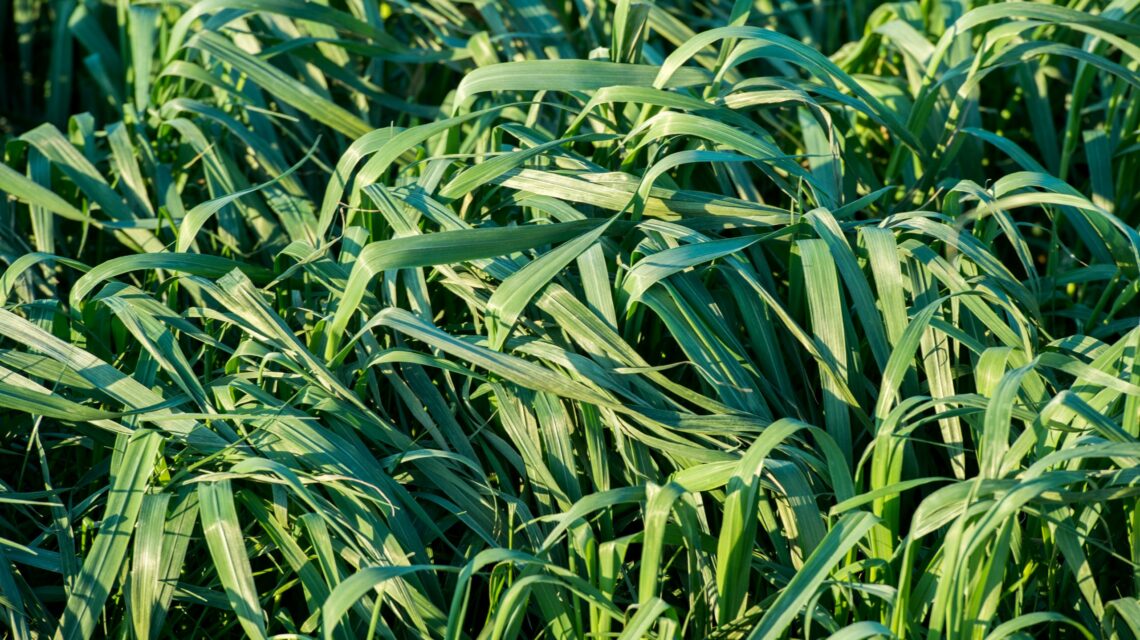
Figure 1: This cereal rye cover crop, shown here in early May, was planted the previous fall following corn silage on a research farm near Ames, Iowa. (Tom Kaspar)
Fall Work
  • Corn silage harvest—Prioritize harvest of fields where cereal rye is to be planted.
  • Tillage or no-tillage—Generally, it is easier to integrate cover crops into no-till or strip-till systems. If tillage is necessary to smooth the seed bed after corn silage harvest, it should take place as soon as possible and prior to rye seeding.
  • Timing of planting—Ideally, plant cereal rye as soon as possible after silage harvest. Plant no later than the following dates: October 21 in northern Iowa, October 28 in central Iowa, and November 7 in southern Iowa.
  • Seeding rate—Use 55 lbs./acre for drilled seed and 60 lbs./acre for shallow incorporation. Seed should have a germination rate greater than 85%.
  • Planting method—Drill to a depth of 0.75–1.50 inches or broadcast with shallow incorporation to 1.50 inches.
Spring Work
  • Termination timing—Terminate the cereal rye in spring when plants are 6 to 12 inches tall and actively growing or at least 10 days before planting soybean—whichever comes first. Although this termination timing is recommended for beginners, generally it is not as critical before soybeans as it is before corn. Check current crop insurance rules regarding timing of termination of cover crops. (See NRCS Cover Crop Termination Guidelines -Resources.)
  • Termination herbicide—Cereal rye can typically be terminated with a full rate of glyphosate (1 lb. acid equivalent/acre) after the rye begins growing in the spring. Use best management practices for glyphosate to improve effectiveness. Glyphosate will kill rye more quickly if the rye is rapidly growing and temperatures are greater than 55°F during the day and greater than 40°F at night. Rye sprayed during cooler weather can be more difficult to kill, may require higher glyphosate rates, or will die more slowly.
  • Termination modifications for wet weather—In a wet or windy spring, be ready to take advantage of any break in the weather and/or use low axle weight sprayers.
  • Option to harvest cereal rye as a silage crop—A rye cover crop planted in the fall and harvested at boot stage can provide a substantial amount of good quality forage. However, waiting for cereal rye to reach the boot stage (mid-May to early June) will delay planting of the next soybean crop. If the following soybean crop will be insured, then rye should be terminated and soybean planted before the crop insurance late-planting deadline. (See NRCS Cover Crop Termination Guidelines -Resources.)
  • Soybean planting—Almost all modern row planters and drills are fully capable of planting soybean into a dead cereal rye cover crop. Planter adjustments are usually needed to ensure correct planting depth and seed furrow closure.
  • Scouting after planting—Scout for soybean emergence, population, and insect pests. Additionally, scout for weeds because substantial cereal rye residue often can delay emergence of annual weeds, which may then delay the application of post-emergence herbicides.
Resources

Cover Crop Selector Tool —available from Midwest Cover Crops Council

Effect of residual herbicides on cover crop establishment (Iowa State Extension and Outreach Integrated Crop Management Encyclopedia Article)

Herbicide Use May Restrict Grazing Options for Cover Crops (Iowa State Extension and Outreach publication CROP 3082, revised January 2017)

NRCS Cover Crop Termination Guidelines (version 4, June 2019)—available from the USDA Natural Resources Conservation Service

Planting Winter Rye after Corn Silage: Managing for Forage, J. Stute, K. Shelley, D. Mueller, and T. Wood. 2009.

Cover Crop Management (Iowa Agronomy Technical Note 38)—available from the USDA Natural Resources Conservation Service

Post Soybean, Going to Corn: Use Oats (Iowa Cover Crop Recipe series, MCCC-104)

Post Corn, Going to Soybean: Use Cereal Rye (Iowa Cover Crop Recipe series, MCCC-103)

Authors

Tom Kaspar, USDA-ARS (retired); and Mark Licht, Iowa State University (Note: This publication was adapted with consent from MCCC under a joint project to produce customized introductory guidance about cover crops for all member states/provinces.)

Reviewers and Contributors

Stefan Gailans, Practical Farmers of Iowa; Michael Henderson and Kevin Kuhn, USDA-NRCS; Eileen Kladivko, Purdue University; Keith Kohler, USDA-ARS; Anna Morrow, Midwest Cover Crops Council; and Matt Ruark, Kevin Shelley, and Dan Smith, University of Wisconsin-Madison

Acknowledgments

This publication was developed with contributions and collaboration from Iowa Learning Farms and Practical Farmers of Iowa.

The Midwest Cover Crops Council (www.https://www.midwestcovercrops.org) aims to facilitate widespread adoption of cover crops throughout the Midwest by providing educational/outreach resources and programs, conducting new research, and communicating about cover crops to the public.
Funding for this project was provided by McKnight Foundation.

March 2020

The U.S. Department of Agriculture (USDA) prohibits discrimination in all its programs and activities on the basis of race, color, national origin, age, disability, and where applicable, sex, marital status, familial status, parental status, religion, sexual orientation, genetic information, political beliefs, reprisal, or because all or a part of an individual’s income is derived from any public assistance program. (Not all prohibited bases apply to all programs.) Persons with disabilities who require alternative means for communication of program information (Braille, large print, audiotape, etc.) should contact USDA’s TARGET Center at (202) 720-2600 (voice and TDD). To file a complaint of discrimination write to USDA, Director, Office of Civil Rights, 1400 Independence Avenue, S.W., Washington, D.C. 20250-9410 or call (800) 795-3272 (voice) or (202) 720-6382 (TDD). USDA is an equal opportunity provider and employer. ©2020 by MCCC. All rights reserved.

Share

Midwest Cover Crops Council (MCCC-121)

Iowa State University Extension (CROP 3165)


This publication is intended to provide a starting point for farmers who are new to growing cover crops. With experience, farmers may fine-tune the use of cover crops for their systems.

Introduction

The following recipe provides an introductory approach for planting a cover crop after corn silage harvest and then planting corn for grain or silage as the next crop. The early harvest of corn silage provides an extended planting window for establishing a cereal rye cover crop.

Planning and Preparation
  • Planning—Read about cover crops. Go to field days. Start small. Be timely. Prioritize management based on purpose and objectives. Arrange for equipment, custom operators, or additional labor as needed.
  • Corn hybrid and planting—If possible, plant the preceding corn silage crop early, and use a hybrid within the adapted maturity range for your location.
  • Residual corn herbicides—Cereal rye can be planted in the fall and produce a successful stand following most spring-applied residual corn herbicides. If cereal rye is to be grazed or harvested for forage, there are some time-interval restrictions. (See Herbicide Use May Restrict Grazing Options for Cover Crops -Resources.)
  • Seed purchase—Pre-order cereal rye seed in early summer. Named rye varieties can produce substantially more growth and have predictable development, but they are usually more expensive than variety not stated (VNS) seed. Use good quality seed that has been cleaned, tested for germination and weed seed contamination, and purchased from a reputable seed dealer.
Fall Work
  • Corn silage harvest—Prioritize harvest of fields where cereal rye is to be planted.
  • Tillage or no-tillage—Generally, it is easier to integrate cover crops into no-till or strip-till systems. If tillage is necessary to incorporate manure, fertilizer, or lime, or to smooth the seed bed after corn silage harvest, it should take place prior to rye seeding.
  • Timing of planting—Ideally, plant cereal rye as soon as possible after silage harvest. Plant no later than the following dates: October 21 in northern Iowa, October 28 in central Iowa, and November 7 in southern Iowa.
  • Seeding rate—Use 55 lbs./acre for drilled seed and 60 lbs./acre for shallow incorporation. Seed should have a germination rate greater than 85%.
  • Planting method—Drill to a depth of 0.75–1.50 inches or broadcast with shallow incorporation to 1.50 inches.
  • Manure, P, K, or lime—For best rye establishment, any manure, P, K, or lime should be injected, subsurface banded, or surface applied and incorporated before planting the cover crop. Manure can also be injected with a low-disturbance applicator after the rye cover crop is at least 4 inches tall, but significant damage to the cover crop may occur. Surface-applying granular P, K, or lime before the ground completely freezes can be done with minimal cover crop damage if the soil is not too wet.
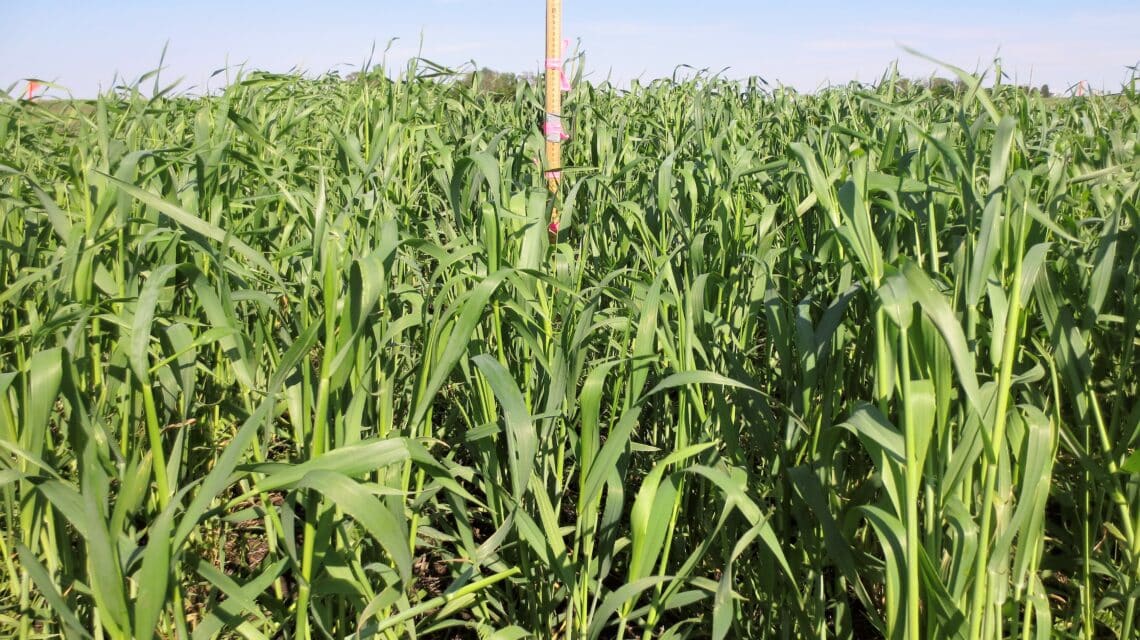
Figure 1: This cereal rye cover crop, shown here in early April, was planted the previous fall following corn silage in northeast Iowa. (Tom Kaspar)
Spring Work
  • Termination timing—Terminate the cereal rye in spring when plants are 6 to 12 inches tall and actively growing or at least 10 days before planting corn—whichever comes first. Check current crop insurance rules regarding timing of termination of cover crops. (See NRCS Cover Crop Termination Guidelines -Resources.)
  • Termination herbicide—Cereal rye can typically be terminated with a full rate of glyphosate (1 lb. acid equivalent/acre) after the rye begins growing in the spring. Use best management practices for glyphosate to improve effectiveness. Glyphosate will kill rye more quickly if the rye is rapidly growing and temperatures are greater than 55°F during the day and greater than 40°F at night. Rye sprayed during cooler weather can be more difficult to kill, may require higher glyphosate rates, or will die more slowly.
  • Termination modifications for wet weather—In a wet or windy spring, be ready to take advantage of any break in the weather and/or use low axle weight sprayers.
  • Option to harvest cereal rye as a silage crop—A rye cover crop planted in the fall and harvested at boot stage can provide a substantial amount of good quality forage. However, waiting for cereal rye to reach the boot stage (mid-May to early June) will delay planting of the next corn crop and may decrease its yield. If the following corn crop will be insured, then rye should be terminated and corn planted before the crop insurance late-planting deadline. (See Resources.)
  • Corn planting—Almost all modern row planters are fully capable of planting corn into a dead cereal rye cover crop. Row cleaner attachments can sometimes be beneficial to increase soil warming, but setting them too deep can cause problems. Planter adjustments are usually needed to ensure correct planting depth and seed furrow closure.
  • Starter fertilizer—Consider equipping your corn planter with a 2×2 starter fertilizer applicator and aim for a starter fertilizer rate between 30–50 pounds of actual N per acre.
  • Scouting after planting—Scout for corn emergence, population, and insect pests. Additionally, scout for weeds because substantial cereal rye residue can often delay emergence of annual weeds, which may then delay the application of post-emergence herbicides.
Resources

Cover Crop Selector Tool —available from Midwest Cover Crops Council

Effect of residual herbicides on cover crop establishment (Iowa State Extension and Outreach Integrated Crop Management Encyclopedia Article)

Herbicide Use May Restrict Grazing Options for Cover Crops (Iowa State Extension and Outreach publication CROP 3082, revised January 2017)

NRCS Cover Crop Termination Guidelines (version 4, June 2019)—available from the USDA Natural Resources Conservation Service

Planting Winter Rye after Corn Silage: Managing for Forage, J. Stute, K. Shelley, D. Mueller, and T. Wood. 2009.

Cover Crop Management (Iowa Agronomy Technical Note 38)—available from the USDA Natural Resources Conservation Service

Post Soybean, Going to Corn: Use Oats (Iowa Cover Crop Recipe series, MCCC-104)

Post Corn, Going to Soybean: Use Cereal Rye (Iowa Cover Crop Recipe series, MCCC-103)

Authors

Tom Kaspar, USDA-ARS (retired); and Mark Licht, Iowa State University (Note: This publication was adapted with consent from MCCC under a joint project to produce customized introductory guidance about cover crops for all member states/provinces.)

Reviewers and Contributors

Stefan Gailans, Practical Farmers of Iowa; Michael Henderson and Kevin Kuhn, USDA-NRCS; Eileen Kladivko, Purdue University; Keith Kohler, USDA-ARS; Anna Morrow, Midwest Cover Crops Council; and Matt Ruark, Kevin Shelley, and Dan Smith, University of Wisconsin-Madison

Acknowledgments

This publication was developed with contributions and collaboration from Iowa Learning Farms and Practical Farmers of Iowa.

The Midwest Cover Crops Council (www.https://www.midwestcovercrops.org) aims to facilitate widespread adoption of cover crops throughout the Midwest by providing educational/outreach resources and programs, conducting new research, and communicating about cover crops to the public.
Funding for this project was provided by McKnight Foundation.

March 2020

The U.S. Department of Agriculture (USDA) prohibits discrimination in all its programs and activities on the basis of race, color, national origin, age, disability, and where applicable, sex, marital status, familial status, parental status, religion, sexual orientation, genetic information, political beliefs, reprisal, or because all or a part of an individual’s income is derived from any public assistance program. (Not all prohibited bases apply to all programs.) Persons with disabilities who require alternative means for communication of program information (Braille, large print, audiotape, etc.) should contact USDA’s TARGET Center at (202) 720-2600 (voice and TDD). To file a complaint of discrimination write to USDA, Director, Office of Civil Rights, 1400 Independence Avenue, S.W., Washington, D.C. 20250-9410 or call (800) 795-3272 (voice) or (202) 720-6382 (TDD). USDA is an equal opportunity provider and employer. ©2020 by MCCC. All rights reserved.

Share

Subscribe to our ListServ

Sign up to receive the latest MCCC news and updates!