State/Province

Midwest Cover Crops Council (MCCC-133)

This publication is intended to provide a starting point for farmers who are new to growing cover crops. With experience, farmers may fine-tune the use of cover crops for their systems.

Introduction

Getting started with cover crops in Manitoba can be challenging due to the short growing season and variable precipitation from year to year. A good place to start with cover crops in annual grain rotations is after small grains, such as spring wheat, winter wheat, oat, barley, or cereal rye. Start small and scale up as you gain experience. Depending on the size of your operation, this could be a small plot, an area within a field, or a small field. Note that the term cereal rye and fall rye can be used interchangeably in this fact sheet. They are synonyms.

Planning and Preparation
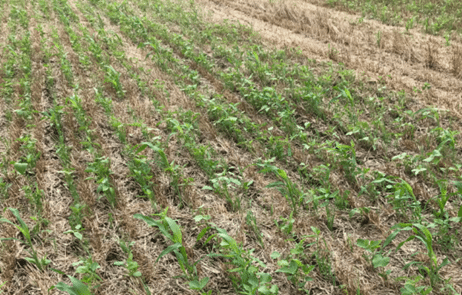
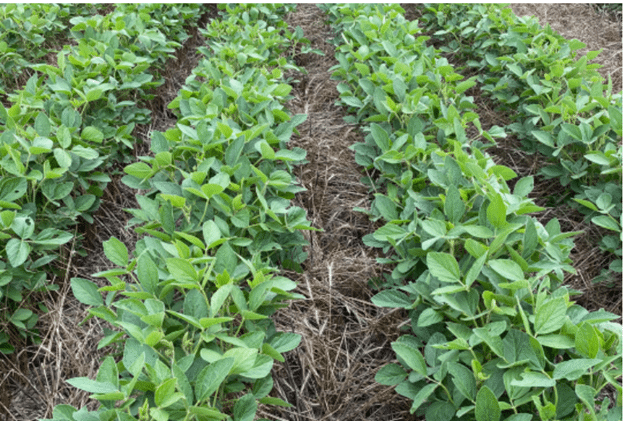
  • Setting a goal—Cover crops need a management plan just like cash crops. Determining a goal is the first step when making your cover crop management plan. Learn about different types of goals for cover crops in Cover Crops 101 (see Resources). The most common goals for planting cereal rye cover crops ahead of soybeans are to create ground cover that protects soil from erosion in the fall and spring (Figure 1), provide weed suppression for small-seeded broadleaf weeds, and provide living ground cover to improve soil trafficability for seeding under wet conditions.
  • Finding resources—Resources for fall-seeded cover crops that are specific to Manitoba are limited but growing. Producer networks to share information and experience are getting established. Some Manitoba watershed districts offer programs to assist producers with adopting cover crops. Contact your local watershed district for more information.
  • Seed purchase—Plan ahead and have your cover crop seed on hand before harvest. Order cereal rye seed early from a reputable seed supplier.
Fall Work
  • Seeding after grain harvest—After harvest and residue management, seed cereal rye as early as possible to allow for optimal cover crop establishment and biomass production in the fall. Manitoba Agriculture recommends seeding cereal rye for grain production between August 25 and September 25 with a seeding rate of 0.75–1.50 bu/acre. Seeding rate recommendations for cereal rye cover crops from neighboring U.S. states range from 0.50–1.00 bu/acre for drilled or 1.00–1.50 bu/acre for broadcast seeding. When drilled, the recommended seeding depth for cereal rye is 0.75–2.00 inches. Research from western Canada with winter wheat found that a seeding depth of 0.50–1.00 inch optimized plant establishment and minimized the risk of winter damage (Loeppky et al. 1989, 128). These are the best available local guidelines to start with for seeding cereal rye cover crops and can be adjusted based on experience.
  • Green bridge awareness—Cereal rye cover crops have the potential to act as a green bridge for wheat streak mosaic virus. Similar to winter wheat, cereal rye cover crops growing near maturing spring wheat or other cereals create a green bridge that allows mites to overwinter and infect neighboring crops of spring wheat with wheat streak mosaic virus the following spring. This virus will not affect a soybean crop following a cereal rye cover crop. However, if this disease is a concern in your area and spring wheat may be grown in neighboring fields, plan to manage the cereal rye cover crop using the most effective management practices for breaking the green bridge for winter wheat crops. Control volunteer cereals after small grain harvest, and plan to have a ten-day gap between small grain harvest and the emergence of your cereal rye cover crop.
Spring Work
  • Scouting—In the spring, evaluate how well your cereal rye cover crop overwintered. Spring environmental conditions should be assessed as accumulated heat units and moisture availability will influence your decision on when to terminate the cover crop.
  • Termination timing—Termination of cereal rye can occur from two weeks before soybean planting to one day after planting. In a University of Manitoba study looking at cereal rye cover crop termination dates, soybean yield was unaffected by the cereal rye cover crop when terminated in this range. If spring soil moisture conditions are dry, it is best to terminate cereal rye at least two weeks before planting as the cover crop can use up moisture needed by the soybean plants for optimal germination and emergence. Producers with experience using cover crops may be more comfortable terminating closer to soybean planting. In general, farmers new to cover crops can expect biomass production from cereal rye cover crops to have less spring growth in Manitoba, especially when terminated early, compared to neighboring growing regions to the south.
  • Termination method—Cereal rye can be terminated in the spring with herbicides, such as glyphosate. Use standard best-management practices, and follow the herbicide label to ensure proper termination. For organic production, the cover crop can be terminated with tillage.
  • Soybean planting—Direct-seeding is the best option when seeding into a dead, dying, or living cereal rye cover crop. When seeding into a living or dying cereal rye cover crop, disc planters or seeders can cut through the plant material. When using seeders with shank or hoe openers, plan to terminate the cereal rye cover crop two weeks before planting to limit rye growth and residue until you gain experience with the performance of your openers under these new conditions.
Figure 1: Soybean growing in July in Morris, Manitoba, with cereal rye cover crop residue covering the soil in between the 30-inch rows (Virginia Janzen)
Evaluation

Taking time to evaluate how things went is an important step for adapting this cover crop recipe to conditions on your own farm. Did you meet your goals? What went right? What would you change next time?

Resources

Cover Crops 101 (Seine Rat Roseau Watershed District)

2020 Prairie Cover Crop Survey Report (University of Manitoba publication)

Rye: Production and Management (Manitoba Agriculture website)

Wheat Streak Mosaic (Manitoba Agriculture website)

Manitoba’s Watershed Districts (Manitoba Agriculture website)

References

Loeppky, Heather, G. P. Lafond, and D. B. Fowler. 1989. “Seeding Depth in Relation to Plant Development, Winter Survival, and Yield of No-Till Winter Wheat.” Agronomy Journal 81, no. 1 (January): 125–29. https://doi.org/10.2134/agronj1989.00021962 008100010023x

Authors

Yvonne Lawley, University of Manitoba; Virginia Janzen, University of Manitoba (Note: This publication was adapted with consent from MCCC under a joint project to produce customized introductory guidance about cover crops for all member states/provinces.)

Reviewers and Contributors

Martin Entz, University of Manitoba; Dorthea Gregoire, Seine Rat Roseau Watershed District; Eileen Kladivko, Purdue University; Oscar Molina, Agriculture and Agri-Food Canada; Callum Morrison, Manitoba Agriculture; Anna Morrow, Midwest Cover Crops Council; Andres Lozano Sepulveda, Manitoba Association of Watersheds

The Midwest Cover Crops Council (www.midwestcovercrops.org) aims to facilitate widespread adoption of cover crops throughout the Midwest by providing educational/outreach resources and programs, conducting new research, and communicating about cover crops to the public.
Funding for this project was provided by McKnight Foundation.

December 2022.

The U.S. Department of Agriculture (USDA) prohibits discrimination in all its programs and activities on the basis of race, color, national origin, age, disability, and where applicable, sex, marital status, familial status, parental status, religion, sexual orientation, genetic information, political beliefs, reprisal, or because all or a part of an individual’s income is derived from any public assistance program. (Not all prohibited bases apply to all programs.) Persons with disabilities who require alternative means for communication of program information (Braille, large print, audiotape, etc.) should contact USDA’s TARGET Center at (202) 720-2600 (voice and TDD). To file a complaint of discrimination write to USDA, Director, Office of Civil Rights, 1400 Independence Avenue, S.W., Washington, D.C. 20250-9410 or call (800) 795-3272 (voice) or (202) 720-6382 (TDD). USDA is an equal opportunity provider and employer. ©2022 by MCCC. All rights reserved.
Share

Virginia Janzen and Dr. Yvonne Lawley – University of Manitoba

Published by the Seine Rat Roseau Watershed District

March 2022

Source link here.

Share

Midwest Cover Crops Council (MCCC-106)

This publication is intended to provide a starting point for farmers who are new to growing cover crops. With experience, farmers may fine-tune the use of cover crops for their systems.


Midwest Cover Crops Council (MCCC-106)

Download PDF

This publication is intended to provide a starting point for farmers who are new to growing cover crops. With experience, farmers may fine-tune the use of cover crops for their systems.

Introduction

The following recipe provides an introductory approach to integrating a cover crop ahead of corn. Planting cover crops prior to corn requires a different set of management considerations than planting them prior to soybean.

Planning and Preparation
  • Planning—Educate yourself. Start small. Be timely. Prioritize management based on your purpose and objectives. Visit https://www.midwestcovercrops.org for many helpful resources.
  • Soybean variety and planting—If possible, plant the preceding soybean crop early and use an early maturity soybean cultivar. One strategy is to use your earliest-maturity-group soybeans on the fields where you plan to seed cover crops and plant those beans first.
  • Residual soybean herbicides—Because oats are very tolerant of most soybean residual herbicides, few restrictions apply unless grazing is being considered. Radish is more sensitive and will likely be harmed if ALS-type (group 2) or PPO-type (group 14) herbicides are used in the soybean cropping season. (See Resources.)
  • Seed purchase—Order cover crop seed early. Named oat varieties grow well but are more expensive than VNS (variety not stated) seed. Work with a reputable seed dealer and choose high-quality seed that has been cleaned, tested for germination and weed seed contamination, and ideally has a seed tag. Although usually more expensive than oat seed, spring barley can be used. For cover crop radishes (daikon type), be sure to purchase a single variety from a reputable seed dealer since mixed varieties may bolt or go to seed rather than producing the desired large amounts of biomass and roots. (Note: Oats/radish alone will winterkill, so this recipe is intended to be a simple option for those interested in beginning with cover crops. But non-winterkill options, such as planting triticale or winter barley, can be incorporated. Remember that this will add an extra level of management, though, because you would have to terminate those cover crops in the spring.)
Fall Work
  • Soybean harvest—Harvest fields where a mix of spring oats/radish are to be planted as early as possible.
  • Timing of planting—Ideally, plant oats/radish immediately after harvest. In most of Illinois, this should occur by mid-September. See Selector Tool (in Resources section) for more precise dates for your county.
  • Planting method—Drill to a depth of 0.25–0.50 inch or broadcast, but note that incorporation of the seed, if any, should be light since excessive disturbance of soybean stubble may reduce any erosion benefit of the cover crop. See Resources for more details on seeding methods.
  • Seeding rate in oats/radish mix—Drilled: oats, 25–60 lbs./acre; radish, 1–3 lbs./acre. Broadcast: oats, 35–65 lbs./acre; radish, 2–4 lbs./acre.
  • Aerial seeding or overseeding—An alternative to seeding after harvest is to do aerial seeding with a plane or helicopter or overseeding with a ground-based vehicle before harvest. In most of Illinois, seeding should take place in late August or by the first week of September and before 25% of the soybean leaves have yellowed and dropped. Rainfall after seeding is essential for establishment.
  • Seeding rate for overseeding—For oats: 40–60 lbs./acre; for radish: 2–4 lbs./acre.
  • Tillage, fertility, or liming—To allow for adequate cover crop growth, it is best if no full-width tillage takes place after seeding and before killing frost. If applying N, P, K, or lime, complete the application prior to the seeding operation or apply to the growing oats/radish before the ground freezes. On fields that are not highly erodible (slope 0–2%), fall strip-tillage is a viable option to apply fertility and reduce the potential effect of a cold and wet spring under moderate to heavy residue. If it is necessary to inject N fertilizer or manure in the fall, a low-disturbance applicator should be used to minimize reduction in surface residues. Any nitrogen added in the fall should include an inhibitor and should not be applied until the soil temperature is below 50°F.
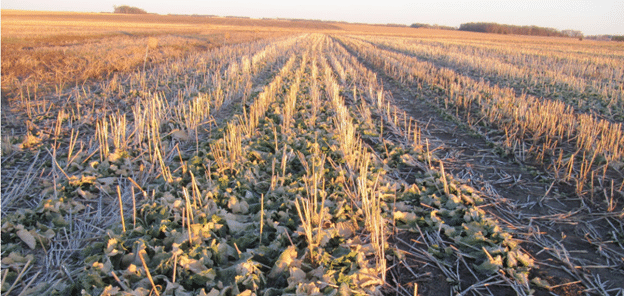
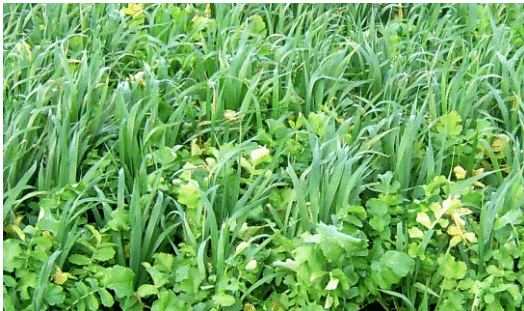
Figure 1. A growing oats/radish mix in soybean stubble (Eileen Kladivko)
Spring Work
  • Starter fertilizer—Strongly consider equipping your corn planter with 2×2 starter fertilizer or making a broadcast N application near planting, aiming for a fertilizer rate of 30–50 pounds of actual N per acre. A preplant anhydrous ammonia application is also a viable option, but a delay in N utilization may occur until the corn grows roots toward the knife tracks. Use the Corn Nitrogen Rate Calculator  determine the total amount of N you should apply for an optimal return on investment.
  • Strip-tillage— In high residue environments on fields that are not highly erodible, spring strip-tillage is an option to avoid the agronomic impacts of a cold and wet spring on corn production.
Resources

Cover Crop Selector Tool available from the Midwest Cover Crops Council

Considerations for First Time Cover Crop Adopters (Illinois Nutrient Research and Education Council publication)

Post Corn, Going to Soybean: Use Cereal Rye (Illinois Cover Crop Recipe series, MCCC-105), available from the Midwest Cover Crops Council

Managing Cover Crops: An Introduction to Integrating Cover Crops into a Corn-Soybean Rotation (Purdue Extension publication AY-353-W)

Residual Herbicides and Fall Cover Crop Establishment (Purdue Extension Weed Science publication)

Terminating Cover Crops: Successful Cover Crop Termination with Herbicides (Purdue Extension publication WS-50-W)

Conservation Cropping System for Corn-Bean No-Till (American Farmland Trust Publication)

Conservation Cropping System for Corn-Bean Till (American Farmland Trust Publication)

Authors

Jennifer Woodyard, University of Illinois Extension; Nathan Johanning, University of Illinois Extension; Shalamar Armstrong, Purdue University (Note: This publication was adapted with consent from MCCC under a joint project to produce customized introductory guidance about cover crops for all member states/provinces.)

Reviewers and Contributors

Marisol Berti, North Dakota State University; Pete Fandel, Illinois Central College; Lowell Gentry, University of Illinois; Tom Kaspar, USDA–Agricultural Research Service (retired); Eileen Kladivko, Purdue University; Anna Morrow, Midwest Cover Crops Council; Dean Oswald, Midwest Grass and Forage; and Kris Reynolds, American Farmland Trust

The Midwest Cover Crops Council (www.https://www.midwestcovercrops.org) aims to facilitate widespread adoption of cover crops throughout the Midwest by providing educational/outreach resources and programs, conducting new research, and communicating about cover crops to the public.
Funding for this project was provided by McKnight Foundation.

Revised May 2019

The U.S. Department of Agriculture (USDA) prohibits discrimination in all its programs and activities on the basis of race, color, national origin, age, disability, and where applicable, sex, marital status, familial status, parental status, religion, sexual orientation, genetic information, political beliefs, reprisal, or because all or a part of an individual’s income is derived from any public assistance program. (Not all prohibited bases apply to all programs.) Persons with disabilities who require alternative means for communication of program information (Braille, large print, audiotape, etc.) should contact USDA’s TARGET Center at (202) 720-2600 (voice and TDD). To file a complaint of discrimination write to USDA, Director, Office of Civil Rights, 1400 Independence Avenue, S.W., Washington, D.C. 20250-9410 or call (800) 795-3272 (voice) or (202) 720-6382 (TDD). USDA is an equal opportunity provider and employer. ©2019 by MCCC. All rights reserved.
Share

Midwest Cover Crops Council (MCCC-131)  


This publication is intended to provide a starting point for farmers who are new to growing cover crops. With experience, farmers may fine-tune the use of cover crops for their systems.

Introduction

This recipe provides an introductory approach for integrating a cereal rye cover crop into a corn silage–soybean rotation.

Planning and Preparation
  • Planning—Educate yourself. Go to field days, learn from farmers who are currently planting cover crops, read about cover crops, check out University of Minnesota cover crop research, and work with your local Natural Resources Conservation Service (NRCS) and Soil and Water Conservation District. Start small and be timely. Consult with your crop insurance representative to ensure planned practices will not affect your insurance coverage.
  • Corn hybrid and planting—If possible, plant the preceding corn silage crop early and use a hybrid adapted to your location.
  • Residual corn herbicides—Manage for optimal weed control. Apply a preemergence herbicide to help control troublesome weeds such as waterhemp, which emerges over a long period of time and late in the season, or weeds that are resistant to key postemergence herbicides. Cereal rye can tolerate most residual corn herbicides applied earlier in the season, but if the rye will be grazed or used for forage, you must follow rotational restrictions listed on the label of any applied herbicides. (See Managing Risk When Using Herbicides).
  • Seed purchase—Order cereal rye seed early from a reputable source. Use good-quality tagged seed that has been cleaned and tested for germination and weed seed contamination. Named varieties can produce greater growth and have more predictable development, but they are usually more expensive than VNS (variety not stated) seed. Utilize University of Minnesota field crop variety trial results for winter rye in variety selection, and consider forage quality if you intend to harvest the cereal rye for forage.
Fall Work
  • Corn silage harvest—Prioritize fields where cereal rye is to be planted.
  • Tillage, manure, fertilizer, and lime—Generally, cover crops are more successful in no-tillage or strip-tillage systems. For best rye establishment, any manure, fertilizer, or lime should be injected, subsurface-banded, or surface-applied and incorporated before planting the cover crop. Manure can be injected with a low-disturbance applicator after the cereal rye is seeded, preferably after the cereal rye has reached 4 inches in height, although the cover crop may be damaged.
  • Timing of planting—Ideally, plant cereal rye by mid-September and as soon as possible after corn silage harvest to optimize biomass production. Try to time seeding before a rain.
  • Seeding rate—If drilling cereal rye (preferred for best establishment), use a minimum seeding rate of 55 lbs./acre of pure live seed (PLS). If broadcasting without incorporation, increase the rate to a minimum of 83 lbs./acre of PLS. Ensure that your seeding rate complies with any cost-share standards from a funding agency, if applicable. Consider increasing the seeding rate to increase forage yield.
  • Planting method—Drill seed to a depth of 0.75–1.50 inches or broadcast with shallow incorporation. Aerial seeding into standing corn once corn reaches the R5 (dent) stage is another option, but this carries more risk of poor establishment than drilling.
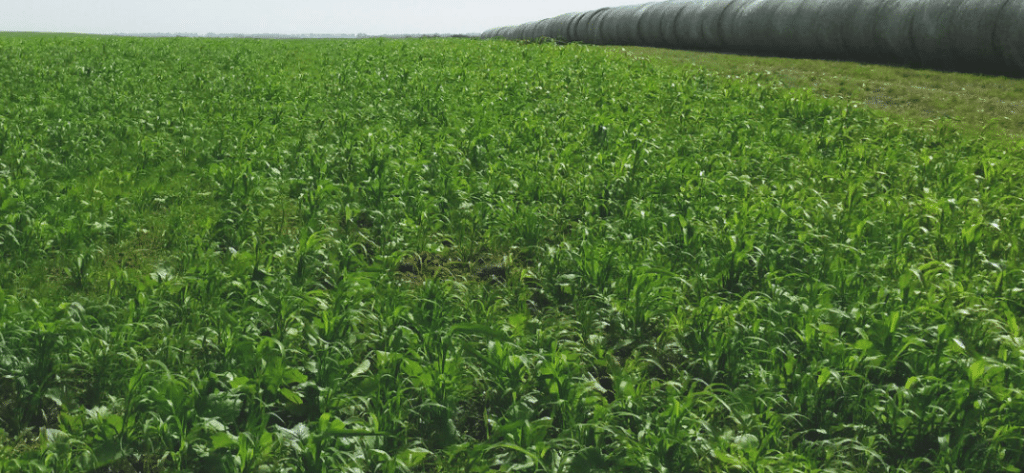
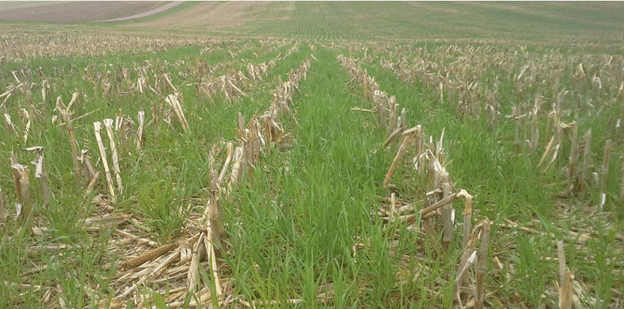
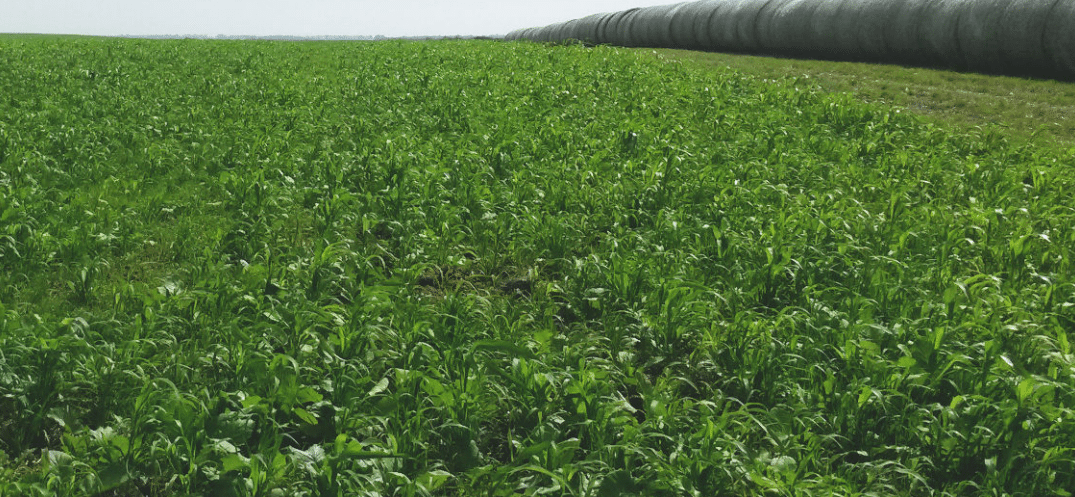
Figure 1. This cereal rye cover crop, shown in May, was seeded
the previous fall after corn silage harvest at the University of
Minnesota Southern Research and Outreach Center in Waseca.
(Lizabeth Stahl)
Spring Work
  • Termination timing—Terminate cereal rye in the spring when plants are actively growing and are no more than 12 inches tall. Terminating cereal rye at least 10 days prior to planting is a standard recommendation, especially under dry/drought conditions. Terminating at or just before planting will allow for more cover crop growth, but this practice carries more risk. Cereal rye can grow quickly in warm weather and be more difficult to control once it reaches the boot stage or is taller than 18 inches. Consult your crop insurance agent and check USDA-NRCS Cover Crop Termination Guidelines to ensure you are in compliance with rules on termination timing.
  • Termination herbicide—Cereal rye can be terminated with a full rate of glyphosate (minimum of 1 lb. acid equivalent/acre) after dormancy breaks in the spring. Termination is most effective and rapid when cereal rye is actively growing, applications are made on a sunny day at least four hours prior to sunset, and air temperatures are >60°F during the day and >40°F at night. Rye sprayed past the boot stage or during colder weather can be more difficult to kill, may require higher glyphosate rates, or will die more slowly.
  • Soybean planting—Most modern planters and drills are fully capable of planting soybeans into a dead or dying cereal rye cover crop. If cereal rye was drilled, planting soybean between rye rows is ideal. If cereal rye termination is delayed, it may be better to plant into standing green plants versus large plants that are dead or dying and that have fallen onto the soil surface, forming a thick mat of residue. Check planting depth and seed furrow closure in case any planter adjustments are needed.
  • Scouting after planting—Scout for soybean emergence, population, insect pests, and weeds. Substantial rye residue may delay weed emergence, ultimately delaying postemergence herbicide application.
Resources

Cover Crop Selector Tool — available from Midwest Cover Crops Council

University of Minnesota Extension Cover Crops website

USDA-NRCS Cover Crop Termination Guidelines (version 4: June 2019)

Minnesota Field Crop Variety Trials (University of Minnesota)

Managing Risk When Using Herbicides and Cover Crops in Corn and Soybean (University of Minnesota Extension)

Spring Management of Cover Crops (University of Minnesota Extension)

Authors

Lizabeth Stahl, Anna Cates, and Axel Garcia y Garcia, University of Minnesota Extension (Note: This publication was adapted with consent from MCCC under a joint project to produce customized introductory guidance about cover crops for all member states/provinces.)

Reviewers and Contributors

Chryseis Modderman and Troy Salzer, University of Minnesota Extension; and Nathan Weise, East Otter Tail SWCD

The Midwest Cover Crops Council (www.midwestcovercrops.org) aims to facilitate widespread adoption of cover crops throughout the U.S. Midwest and Ontario by providing educational/outreach resources and programs, conducting new research, and communicating about cover crops to the public.
Funding for this project was provided by McKnight Foundation.

  September 2022 The U.S. Department of Agriculture (USDA) prohibits discrimination in all its programs and activities on the basis of race, color, national origin, age, disability, and where applicable, sex, marital status, familial status, parental status, religion, sexual orientation, genetic information, political beliefs, reprisal, or because all or a part of an individual’s income is derived from any public assistance program. (Not all prohibited bases apply to all programs.) Persons with disabilities who require alternative means for communication of program information (Braille, large print, audiotape, etc.) should contact USDA’s TARGET Center at (202) 720-2600 (voice and TDD). To file a complaint of discrimination write to USDA, Director, Office of Civil Rights, 1400 Independence Avenue, S.W., Washington, D.C. 20250-9410 or call (800) 795-3272 (voice) or (202) 720-6382 (TDD). USDA is an equal opportunity provider and employer. ©2021 by MCCC. All rights reserved.
Share

Subscribe to our ListServ

Sign up to receive the latest MCCC news and updates!